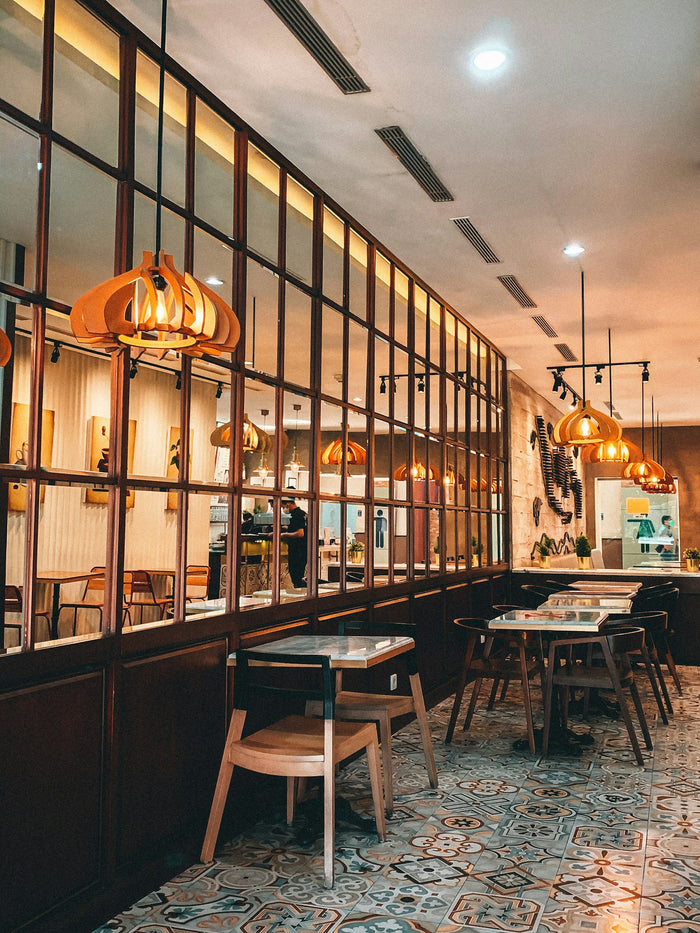
In a restaurant, smell goes to work before the menu does. A guest walks in, breathes, and has already formed an opinion. The problem is that hospitality has two very strong sources of smell competing with each other: the kitchen and the scenting equipment. If you do not separate them properly, the result is an odd mixture that helps nobody.
Where the diffuser goes
The basic rule is simple: the diffuser goes where air enters the space, not where air leaves it. Put it next to an extractor and the scent goes straight up the duct, and the customer never notices it.
- Entrance. The most profitable spot. At chest height or a little above, a metre or a metre and a half from the door, so the first impression is the right one.
- Dining room. Placed high and with the flow of the air conditioning, never above the tables or pointing directly at a guest.
- Toilets. Here you want to neutralise rather than perfume. A small unit on short cycles is enough.
What to avoid near the kitchen
The pass and the kitchen are not scented. The smell of frying, of the griddle or of a stock pot is far heavier than a fragrance, and mixing the two gives you a confused room. What does work is stopping that smell from reaching the dining room: good extraction, the swing door kept closed, and a unit in the dining room working with the airflow rather than against it.
If the problem is kitchen smell reaching the dining room, what you need is not more fragrance but odour neutralisation in the transition area. Covering one smell with another almost never works.
What intensity to use
The most repeated mistake in hospitality is setting the diffuser to maximum on day one. The nose saturates within minutes and the unit ends up switched off in a drawer. The right way round is the opposite:
- Start at the lowest intensity the unit offers.
- Leave it there for two or three full days of service.
- Ask the floor staff, not yourself. They spend eight hours inside and adapt just like a regular customer.
- Only go up a notch if nobody notices it walking in from the street.
Another setting almost nobody uses: scheduling. There is no point scenting at eleven in the morning with an empty room. Switching on half an hour before the first service and working only during lunch and dinner cuts consumption noticeably and the result shows more.
Which unit for the size of the dining room
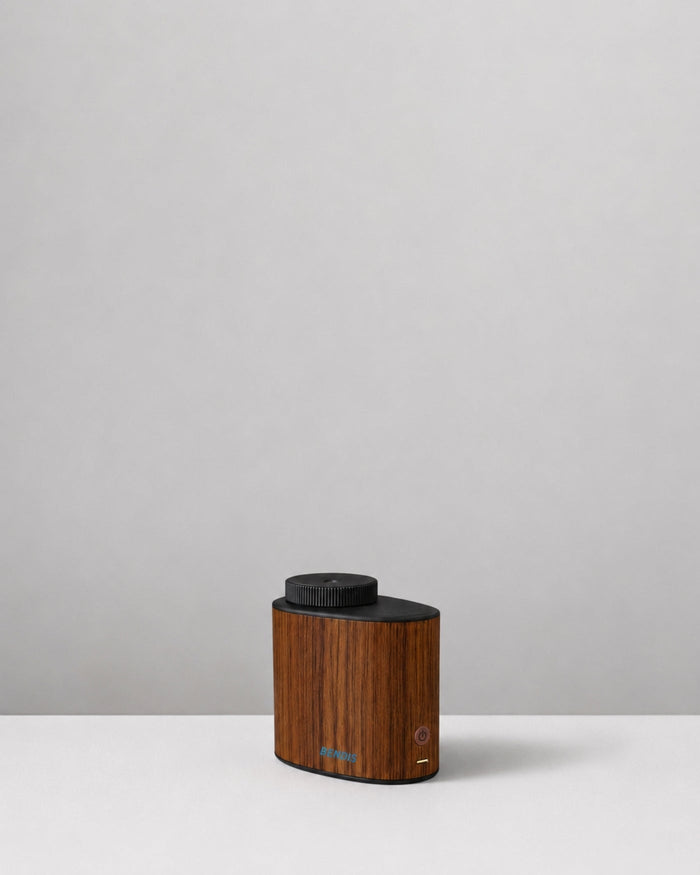
Coverage is measured by square metres of dining room, not by number of tables. A small neighbourhood dining room is usually covered by a unit rated up to 120 m². For a large restaurant with several rooms, or with high ceilings, you need units of 600 m² or more, or two units instead of forcing one.
You can see it model by model in the diffuser catalogue, and each product page states the area it covers.
And maintenance
In hospitality the unit works long hours, so the nozzle builds up residue sooner than in an office. A monthly clean with the alcohol syringe included in the kit prevents most incidents. It is explained step by step in the instruction manuals and in the video tutorials.
If you would rather not buy the equipment, restaurants commonly use the monthly scenting subscription: a fixed monthly fee that includes the unit and that month's fragrance. Write to info@bendis.es with the size of your dining room and we will tell you which model fits.