Short answer: The best scent for a restaurant depends on its cuisine. Fig or Lemon in an Italian or Mediterranean restaurant, Green Tea in a Japanese one, Cappuccino or Orange Blossom for brunch and cafés, woods such as N°17 or N°10 in a steakhouse, Lemon over a neutraliser in a seafood restaurant, and N°19 or N°23 in a cocktail bar. In fine dining, almost nothing in the dining room.
Before choosing: three rules for any cuisine
- It must not compete with the food. In the dining room, scent always sits below the dishes. We go into this in how to scent without clashing with the food.
- It must fit what you serve. The scent has to feel like part of the restaurant, not perfume sprayed on top.
- Neutralise first. If there is frying, fish or drain smell in the background, the fragrance does not cover it: it mixes and makes it worse. Start by neutralising frying smells or with odour neutralisation.
Summary table: scent by type of restaurant
| Type of restaurant | Main scent | Alternatives | Best avoided |
|---|---|---|---|
| Italian and Mediterranean | Fig | Lemon, Orange Blossom | Vanillas and dense orientals |
| Japanese and Asian | Green Tea | N°8 elegant woody | Gourmand, Cinnamon & Orange, Coconut |
| Brunch and café | Cappuccino | Orange Blossom, Cinnamon & Orange in winter | Scenting the room if it already smells of fresh coffee |
| Steakhouse and grill | N°17 aromatic woody | N°10 woody mineral, N°8 | Sweet florals and fruits |
| Seafood restaurant | Lemon, over Aloe Vera neutraliser | N°3 aquatic citrus, Green Tea | Intense sweet and floral scents |
| Cocktail bar | N°19 woody spicy sweet | N°23 sweet oriental, N°17 | Cleaning style citrus |
| Fine dining | Nothing in the dining room | N°8 very soft at the entrance | Any identifiable scent at the table |
Italian and Mediterranean restaurants
The kitchen already brings olive oil, garlic, tomato and basil. The scent has to sound like the same thing without repeating it. Fig is green and slightly sweet, with that fig leaf touch that works very well in a Mediterranean dining room. Lemon works at the entrance and in the toilets, and effortlessly evokes the Italian coast. For something brighter, Orange Blossom.
Avoid vanillas and dense orientals: with pasta and pizza they quickly become cloying.
Japanese and Asian restaurants
Subtlety rules here. Green Tea is the safest choice: clean, slightly bitter and hard to pin down. For an entrance with more character, N°8, a restrained woody tea that gives a sense of a well kept place.
Sweet Western notes (coffee, coconut, cinnamon) break the consistency with the menu. In sushi bars with an open kitchen, it is best to scent only the entrance and toilets.
Brunch and cafés
It depends on how much your product already smells. If you have a coffee machine working non stop or an oven in view, do not scent the room: the real smell does the job better and you would be competing with it. Focus on neutralising the storeroom, bins and toilets.
If the coffee smell does not reach the door, Cappuccino at the entrance helps draw people in. For a bright brunch spot, Orange Blossom. In winter, Cinnamon & Orange at low intensity. More ideas on our café scenting page.
Steakhouse and grill
The grill already provides the smoky note. The scent should accompany it with wood and a little leather, never with flowers. N°17 (aromatic woody, with a touch of clean leather) works very well at the entrance and bar. N°10, drier and more citrusy, if the venue is modern.
Smoke that builds up in upholstery and curtains is dealt with outside service hours using the Cotton Fresh neutraliser, designed for smoke and burnt smells.
Seafood restaurants
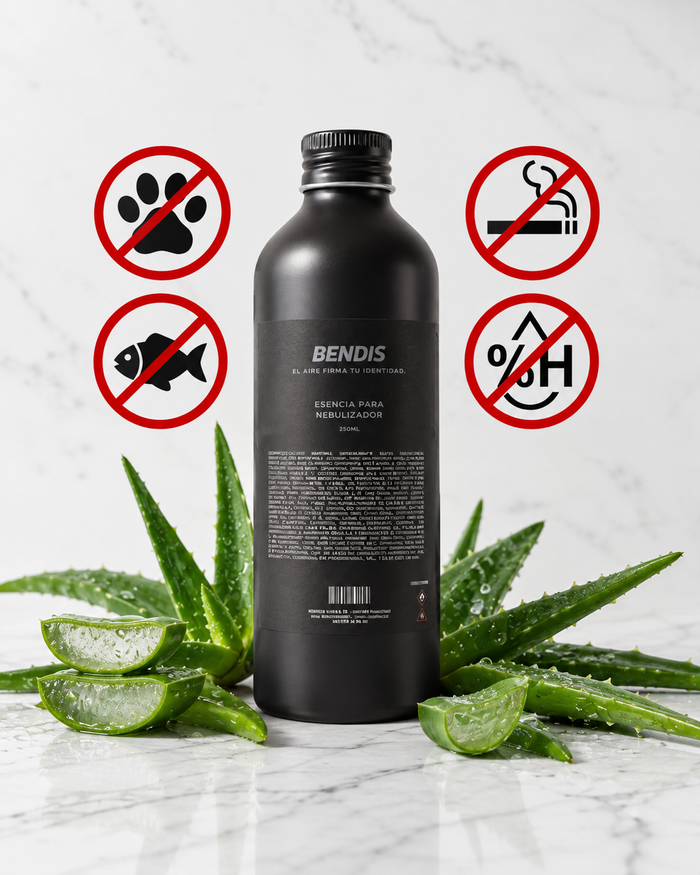
Here the first thing is not scent but the fish smell in the kitchen, cold rooms and bins. That is what the Aloe Vera neutraliser is for, formulated for fish, damp and tobacco. Once that is under control, Lemon at the entrance and in the toilets is the most natural fit: nobody is surprised to smell lemon in a seafood restaurant.
If you prefer something less obvious, N°3, aquatic and citrusy, gives a clean, sea air feel without smelling of cleaning products.
Cocktail bars
This is the only type of venue on this list where scent can be more noticeable, because it is part of the experience and there are no dishes to protect. N°19 (cinnamon, leather and a sweet base) has character and is noticed as you walk in. N°23, with tonka, vanilla and amber, is more enveloping. For a more classic bar, N°17.
N°23 and N°19 are intense: shorten the cycle before raising the power. And if your cuisine is Middle Eastern or you have a lounge area, N°12 (oud and amber) works well, always at low intensity. More about bars on our bar and pub scenting page.
Fine dining
The rule is that guests smell the dishes, not the room. In the dining room, the norm is not to scent at all. Where it does add value is at the entrance and reception, with N°8 barely perceptible, and in the toilets, with a neutraliser and Green Tea or N°3 on top.
Toilets: the same for every cuisine
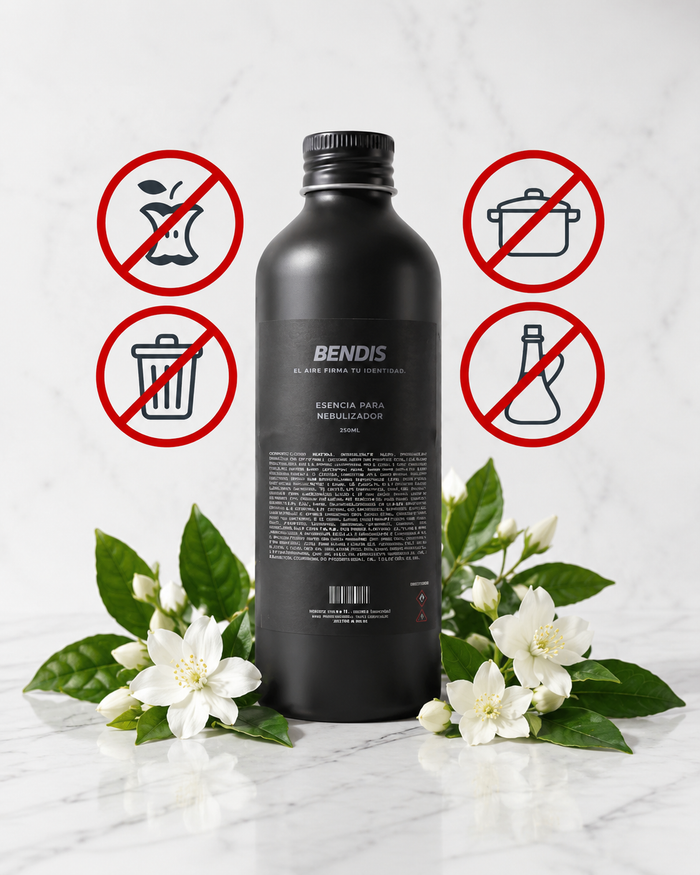
Whatever the type of restaurant, the toilet gets its own unit and neutraliser first. Cotton Fresh if the problem is faecal odour, Jasmine neutraliser if it is drains. Once under control, a fresh note: Mint at low intensity, Lemon or Green Tea.
How to test the scent before deciding
Ask for 5 ml samples and smell them in your restaurant, at service time and with the kitchen running. The same scent smells different in a bottle than diffused in a room with food. You will find them all in the fragrance catalogue.
If you are not yet sure how many units you need or what budget to work with, start with the scent marketing strategy for restaurants. To keep it going every day, see the opening, service and closing routine. With the monthly scenting fee, €29.90 to €94.90 + VAT per month depending on the unit, fragrance is included. More on our restaurant scenting page.
Frequently asked questions
What is the best scent for an Italian restaurant?
Fig in the dining room at low intensity, and Lemon at the entrance and in the toilets. Both fit Mediterranean cooking without competing with the dishes.
Can a coffee scent be used in a restaurant?
In brunch spots and cafés, yes, especially at the entrance. In a restaurant with a different cuisine it is confusing, and in a Japanese restaurant or a steakhouse it breaks the consistency.
Which scent should a seafood restaurant use to remove the fish smell?
No fragrance removes fish smell on its own. First Aloe Vera neutraliser in the kitchen and storage areas, then Lemon or N°3 at the entrance and in the toilets.
Which fragrance works in a cocktail bar?
Scents with character such as N°19 or N°23, or N°17 if the bar is more classic. They are intense, so it is best to programme them with short cycles.
Can the scent be changed with the seasons?
Yes, without losing your identity. The best approach is to alternate two related fragrances, for example Orange Blossom in summer and Cinnamon & Orange in winter in a café. Ideas in scents for each season.