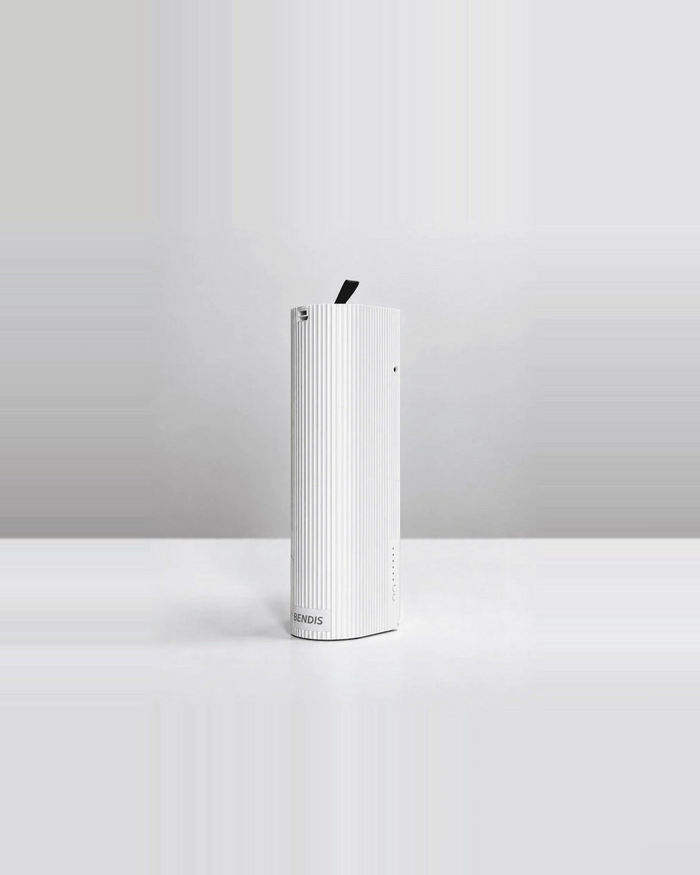
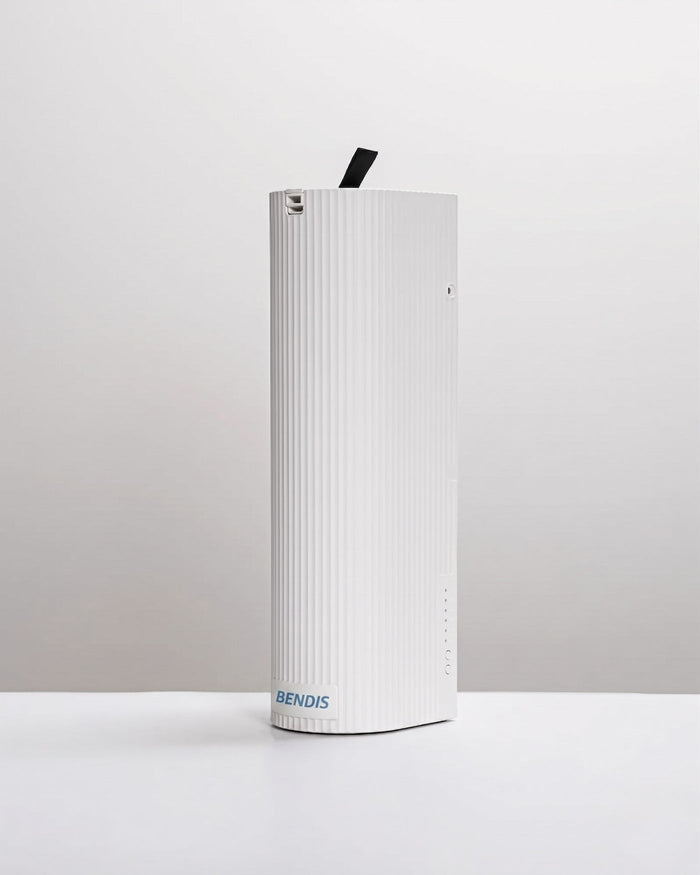
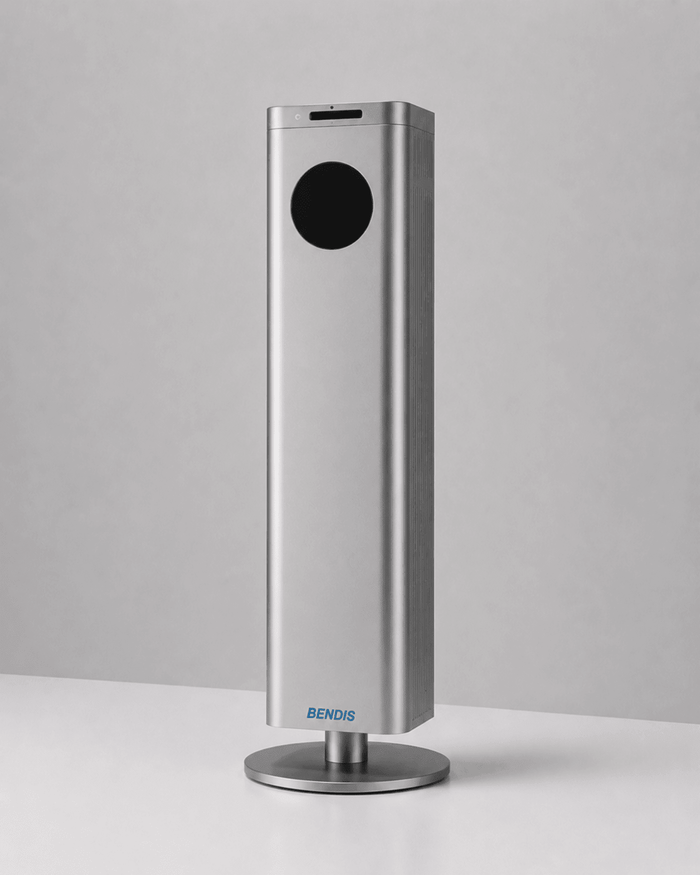
BENDIS diffusers do not use water because they nebulise the fragrance cold, without diluting it. This avoids three typical problems of water-based diffusers in a commercial space: added humidity, standing water that ends up smelling, and frequent cleaning. Maintenance comes down to cleaning with isopropyl alcohol every 3 months.
When someone compares a professional diffuser with a home aroma humidifier, the technical difference comes down to one word: water. And in a commercial space that word brings three specific problems.
1. Added humidity in the venue
A device that works with water humidifies while it scents. In a room at home that may even be welcome. In a commercial space, not always:
- If the air conditioning is running, it has to work harder to compensate for that humidity.
- If you sell sensitive products (textiles, stationery, electronics, food), extra humidity is not good for you.
- In basements or venues that are already damp, adding more worsens the musty smell you were trying to solve. We cover it in how to remove damp odour in a commercial space.
A cold-air nebuliser adds no water to the air. It sprays the product as it is, without diluting it.
2. Standing water in the reservoir
A reservoir with water that goes days without being emptied ends up smelling, and that smell comes out of the nozzle mixed with the fragrance. That is why many home devices smell odd after a few weeks.
In a business, where the device runs every day and nobody empties it at night, it is a real problem. Without water, the problem does not exist.
3. Cleaning and staff time
A water-based device needs frequent emptying and cleaning to avoid build-up of limescale and residue. A cold-air nebuliser needs its circuit cleaned with isopropyl alcohol every 3 months. If it runs many hours a day or you change fragrance, this can be done sooner.
The full procedure is in how to clean and maintain your diffuser and in the manuals for each model.
With or without water: summary
| Water diffuser (ultrasonic) | Waterless nebuliser | |
|---|---|---|
| Humidity in the air | Yes, it adds | No |
| Scent concentration | Diluted in water | Undiluted |
| Risk of standing water | Yes | No |
| Cleaning | Frequent, with emptying | Every 3 months, with alcohol |
| Typical coverage | One room | From 7 m² to 1,600 m² depending on model |
What the scent gains
Because it is not diluted in water, the fragrance reaches the air at its original concentration. This has two practical effects: it is noticeable over much larger areas, and what you smell in the room resembles what you smelled in the bottle.
In addition, the particle that leaves the nozzle is so fine that it stays suspended instead of falling. It does not wet tables or floors.
The refills used in BENDIS devices are concentrated fragrances made in Spain, formulated for nebulisation. You will find them all in fragrances and refills.
When water is worth it
To be fair: in a small room at home, in winter with the heating drying the air, an ultrasonic device does its job well and costs less. The problem appears when you try to use the same device to cover a commercial space.
The full comparison of the three technologies is in cold-air nebulisation, ultrasonic or heat. And the range, with each model's coverage, is in the diffuser catalogue.
Which model to choose for your venue
For a shop or a practice of up to 100 m², the LUME. Up to 120 m², the BENDIS FLOW, which costs €79.99 or €39.90 per month + VAT with the scenting subscription, fragrance included. For 600 m² or more, ORBIT, ATMOS or HALO. Only ATMOS and HALO connect to air conditioning.
Frequently asked questions
Does a waterless diffuser dry out the air?
No. It does not add humidity, but it does not remove it either. The humidity level of the space remains whatever the HVAC system sets.
Can I put water in a BENDIS nebuliser?
No. Never. Water clogs the nozzle. Only load refills suitable for nebulisation and, for cleaning, isopropyl alcohol.
How much fragrance does a waterless diffuser use?
As a guide, a LUME uses about 150 ml per month and a FLOW about 250 ml. It depends on the intensity, the schedule and the size of the space.