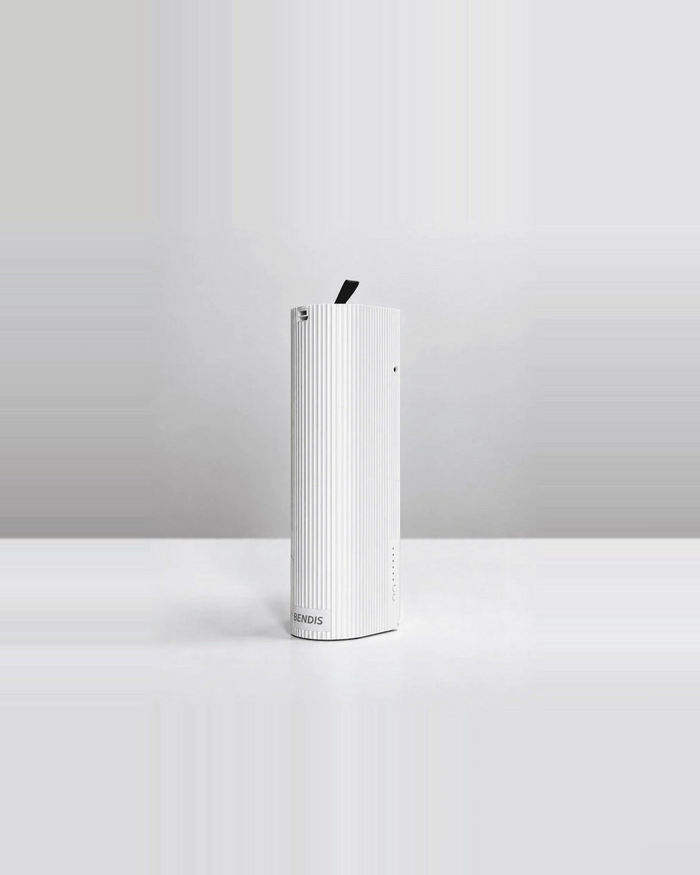
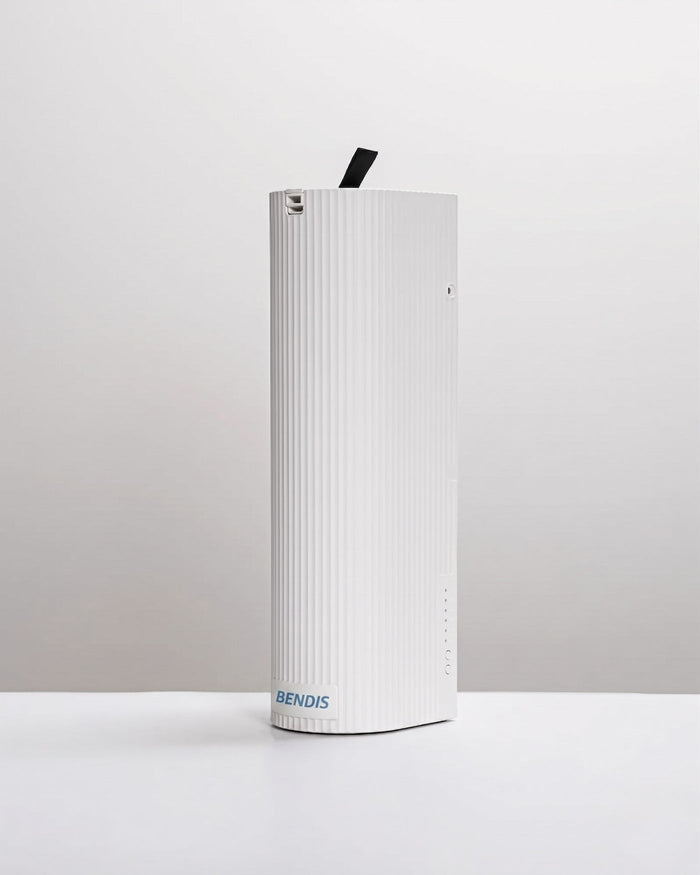
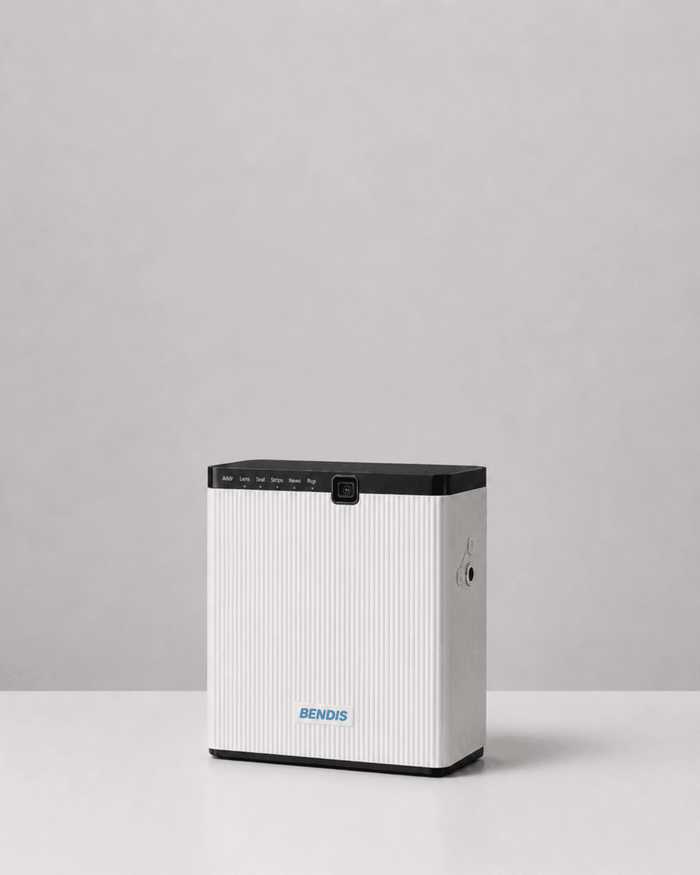
Heat diffusers evaporate the fragrance with a heating element and alter its smell. Ultrasonic diffusers mix it with water and dilute it. Cold-air nebulisers turn it into microparticles without water or heat. Any of them works for a single room; for a commercial space or a large home, cold-air nebulisation is the one that reaches.
When someone searches for a scent diffuser, they find devices for 15 euros and others for several hundred. The difference is not the brand. It is the technology inside, and each one does something different.
Heat diffusion
A heating element warms the product and the scent is released as it evaporates. This is the technology used in candles, burners and plug-in electric air fresheners.
Advantage: cheap and silent. Drawback: heat alters the fragrance, so the scent that comes out is not exactly the one you bought, and coverage is very limited. It works for a small room, not for a commercial space.
Catalytic lamps also work with heat, on a different principle. You may be interested in what catalytic lamps are and how they work.
Ultrasonic
A membrane vibrates at high frequency over a mixture of water and product and generates a cold mist. This is what domestic aroma humidifiers use.
Advantage: it does not alter the product and humidifies the air. Drawback: it must be mixed with water, which greatly dilutes the scent, and it adds humidity to the space, which is not always desirable in an air-conditioned venue or one with sensitive goods. Coverage is also short and the reservoir needs frequent cleaning.
Cold-air nebulisation
An air pump pushes the undiluted fragrance through a nozzle and breaks it into microparticles that remain suspended. There is no heat, no water and no dilution.
Advantage: the scent arrives as it is, the particle is so fine it stays in the air longer and coverage reaches hundreds of square metres. It allows intensity and schedules to be programmed and does not wet surfaces. Drawback: the device costs more and the nozzle needs cleaning every 3 months. We explain it in what a professional nebuliser is.
Quick comparison
| Heat | Ultrasonic | Cold-air nebulisation | |
|---|---|---|---|
| Alters the fragrance | Yes | No | No |
| Uses water | No | Yes | No |
| Coverage | A small room | One room | From 7 m² to 1,600 m² depending on model |
| Programmable | Rarely | Basic | Schedules, days and intensity |
| Maintenance | Change the refill | Empty and clean often | Clean with alcohol every 3 months |
| Device price | Low | Low or medium | Medium or high |
Which to choose
- One room at home: any of the three will do. If you want it without humidity and programmable, a small nebuliser.
- A living room or a whole home: cold-air nebulisation. The LUME covers 100 m² and the FLOW 120 m².
- A commercial space: cold-air nebulisation. The other two cannot reach.
- A hotel, a gym or a warehouse: cold-air nebulisation, in many cases connected to the HVAC system. Only ATMOS and HALO connect to air conditioning.
Mistakes when comparing diffusers
- Comparing only the device price. Also count how much it covers and how much product it uses per month to achieve the same effect.
- Trusting the square metres on the box. Many domestic diffusers state a coverage that is only achieved with the door closed and at one metre.
- Forgetting maintenance. A water reservoir that nobody empties ends up smelling worse than the problem you wanted to solve.
A note on what goes inside
Each technology requires its own product. A nebuliser needs fragrances formulated for nebulisation. BENDIS fragrances are concentrated fragrances made in Spain, not pure essential oils. You will find them all in fragrances and refills.
All BENDIS devices, except the ROAM car diffuser, work by cold-air nebulisation, from the 7 m² PULSE to the 1,600 m² NOVA. You can see them in the diffuser catalogue and download each one's data sheet on the manuals page.
Frequently asked questions
Which diffuser smells strongest?
For the same space, the cold-air nebuliser, because it diffuses the undiluted fragrance and distributes it better. But it is adjustable: more powerful does not mean more intense if you set it low.
Are ultrasonic diffusers suitable for essential oils?
Yes, that is their most common use, with a few drops in water. For continuous scenting of large spaces they fall short.
Does a nebuliser use a lot of electricity?
No. It works in short pulses with pauses, so its power consumption is usually low compared with other devices in the venue.