BENDIS Team · 10 October 2026
Short answer: yes, you can use a diffuser with a dog at home: at low intensity, in cycles, away from its bed and food, with ventilation and with the door open so it can leave. If your dog sneezes, rubs its nose, drools or avoids the room, turn the intensity down or switch it off.
In short
- Dogs tolerate scents better than cats, birds or rodents, but they are not immune.
- Their sense of smell is far keener than ours: what seems gentle to you can feel intense to them.
- Concentrated essential oils: never on the skin and never within reach. Tea tree causes the most poisonings.
- Low intensity, spaced-out cycles and always a free way out.
- Puppies, senior dogs, flat-faced breeds or dogs with breathing problems: ask your vet first.
If you want to get rid of dog smell, see our guide on how to get rid of dog smell in the house. This one covers something else: how to use an aroma diffuser without making your dog uncomfortable.
Do dogs cope with scents better than cats?
Partly, yes. The Merck Veterinary Manual explains that dogs do not have the liver deficiency that makes cats so sensitive to phenolic compounds. But it adds that essential oils can harm them too, especially if swallowed or spilled on the skin. And their nose amplifies everything: the ASPCA reminds owners that pets' sense of smell is much stronger than ours, so a scent that seems mild to you can overwhelm them.
What intensity should you use with a dog at home?
Low, and only turn it up if needed. As a guide:
| Setting | With a dog at home |
|---|---|
| Intensity | Low. If the scent is very noticeable when you walk in, it is too much. |
| Cycles | Spaced out, with long pauses, and only during the hours you need it. |
| Placement | High up, away from its bed, food and water, where it cannot knock it over. |
| Room | Ventilated, with the door open. |
| First few days | Watch how your dog reacts and adjust. |
| Special cases | Puppies, senior dogs, brachycephalic breeds (bulldog, pug) or dogs with breathing problems: ask your vet first. |
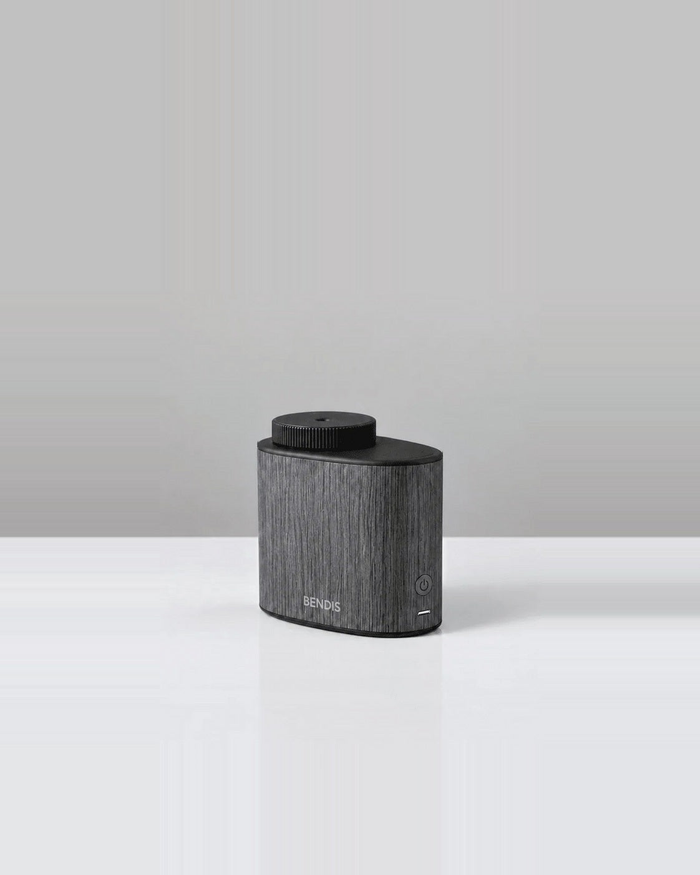
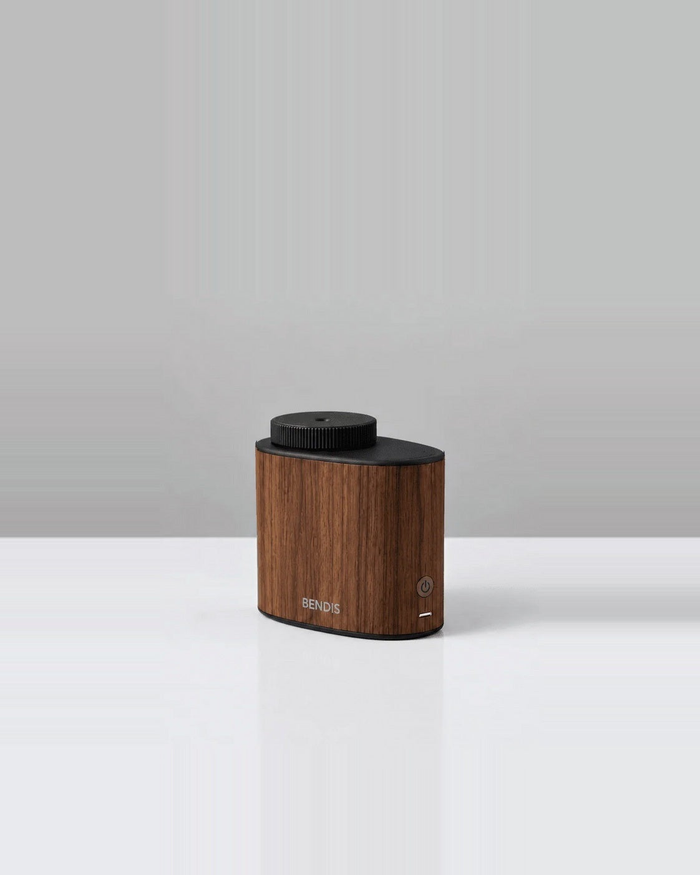
With an app-controlled model such as the FLOW (up to 120 m²) or the SENSE (up to 80 m²), you set intensity, cycles and schedules from your phone and keep it off when nobody is home.
Which scents or oils should you avoid with dogs?
Merck notes that tea tree is the essential oil most often involved in pet poisonings, that cinnamon, pennyroyal and tea tree can damage the liver, and that eucalyptus, wintergreen, pennyroyal, sage, cedar and birch can cause seizures. The basic rule: never put essential oils on your dog's skin or coat, never give them by mouth and never leave bottles within reach.
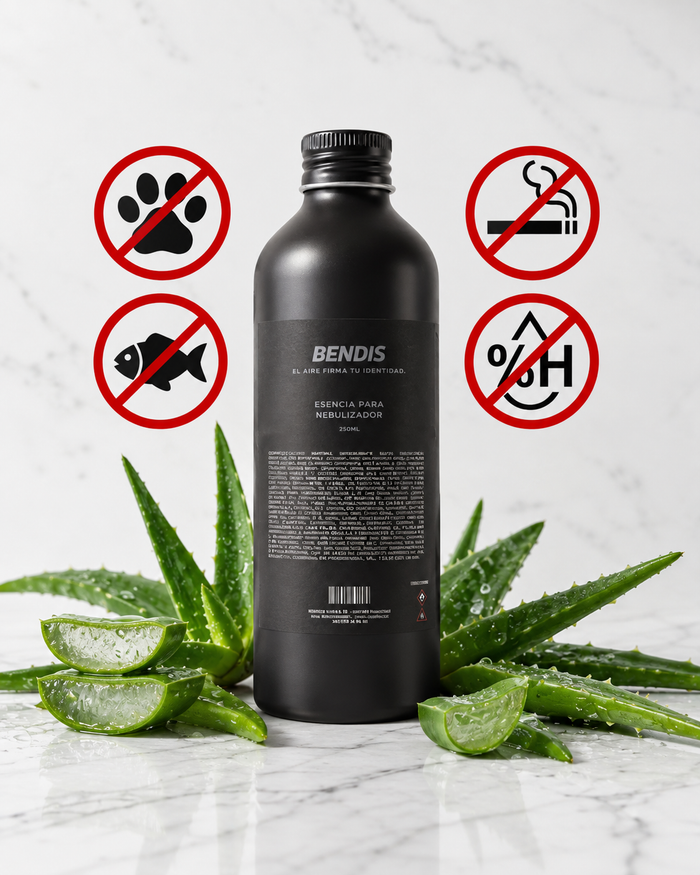
Our refills are not pure essential oils but concentrated, alcohol-free home fragrances with no therapeutic effect. That does not make them safe for every animal, so the same rule applies: low intensity and away from the dog.
Where should you not put the diffuser?
- Next to its bed, food bowl or water bowl.
- On the floor or within reach: if it gets knocked over, your dog may lick the liquid.
- In an enclosed space it cannot leave: a closed room, its crate or the carrier.
- In the car with the dog inside. If you use a car diffuser like the ROAM, switch it off when your dog travels.
How can I tell if the scent bothers my dog?
Repeated sneezing, rubbing its nose with its paws or on the floor, watery eyes, drooling, coughing, panting without heat or exercise, vomiting or lethargy. And the clearest one: it leaves the room or sleeps somewhere else. If you see this, switch the diffuser off and ventilate. If the symptoms do not ease quickly, or there is difficulty breathing, call your vet.
Frequently asked questions
Is an aroma diffuser bad for dogs?
We cannot tell you it is harmless for every dog. Used at low intensity, with ventilation and a free way out, the risk drops a lot. Watch your dog and adjust.
Can I leave the diffuser on when my dog is home alone?
Better not. Schedule it for the hours when you are there and can see how your dog reacts.
Which smells do dogs dislike?
Many dogs reject very strong smells and intense citrus. More than the type of scent, what usually bothers them is the intensity.
Is a neutraliser better than a fragrance with a dog?
If the problem is dog smell, yes: the Aloe Vera neutraliser acts on that odour instead of covering it. Also at low intensity.
What if there is also a cat or birds at home?
Then the most sensitive animal sets the rules. Read our guides on using a diffuser with cats, with birds and with rabbits and rodents.
More about odours in removing dog smell from the house and neutralising pet odour at home.
Sources
- Merck Veterinary Manual: Toxicoses from Essential Oils in Animals
- ASPCA Animal Poison Control Center: essential oils and diffusers
For information only. Not a substitute for advice from a vet.