BENDIS Team · 10 October 2026
Short answer: yes, you can have a diffuser in a home with a cat, but keep it very gentle. Minimum intensity, short cycles, a ventilated room, the device out of reach and the door open so the cat can leave. No essential oils near your cat. If it sneezes, drools, coughs or avoids the room, switch the diffuser off and talk to your vet.
In short
- Cats clear certain aromatic compounds (phenols and others) poorly because of a quirk in their liver.
- Tea tree, citrus, eucalyptus, peppermint, pine, wintergreen, ylang ylang, cinnamon and clove are among the essential oils veterinary sources list as toxic to cats.
- House rule: very, very gentle. Better if your cat barely notices it.
- Clean the source of the smell first (litter box, blankets). A diffuser does not replace cleaning.
- Cat with asthma, kitten, senior or unwell cat: ask your vet first.
This guide complements two others: cat and litter box smell, focused on cleaning and neutralising, and are air fresheners safe for pets, which compares sprays, candles and plug-ins. Here we get practical: how to set up a nebulising diffuser when a cat lives with you.
Why are cats more sensitive to scents?
Because their liver clears some compounds poorly. Cats have very limited glucuronidation, one of the routes the body uses to get rid of phenols and other substances found in many essential oils. The Merck Veterinary Manual puts it plainly: cats are very sensitive to phenolic compounds. The root cause is a gene (UGT1A6) that does not work in felines, as described in a study published in PLoS One in 2011.
Then there is grooming. Nebulisers and ultrasonic diffusers release microdroplets that can settle on fur, and cats lick themselves. Merck and Pet Poison Helpline both point to this as an extra risk of active diffusers compared with passive ones.
Which essential oils should you avoid with cats?
Pet Poison Helpline lists as toxic to cats the oils of wintergreen, sweet birch, citrus (d-limonene), pine, ylang ylang, peppermint, cinnamon, pennyroyal, clove, eucalyptus and tea tree. According to Merck, tea tree is the essential oil most often involved in pet poisonings.
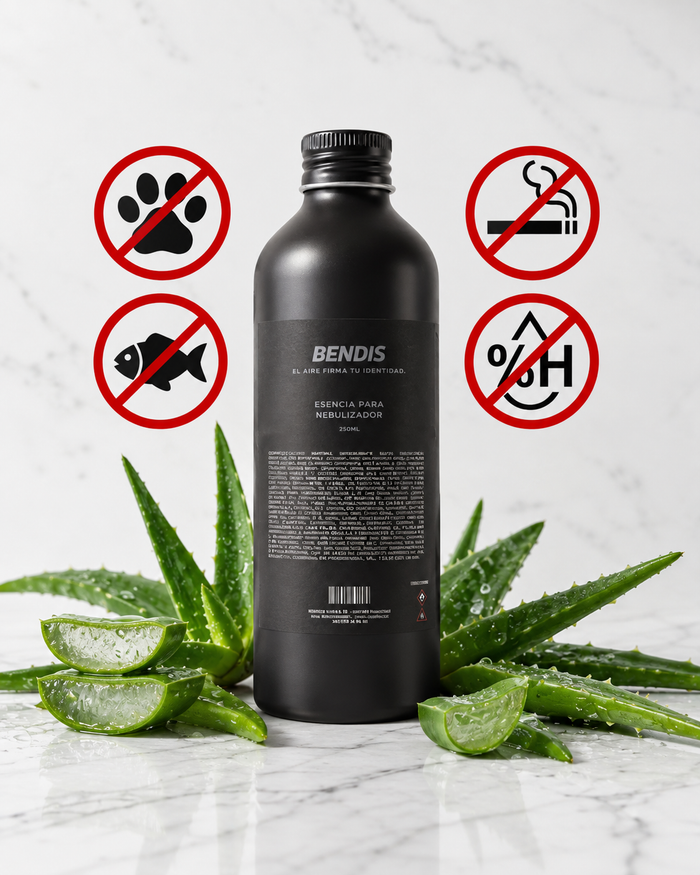
Our refills are not pure essential oils: they are concentrated, alcohol-free home fragrances made for cold-air nebulisation, with no therapeutic effect. Even so, we will not tell you they are safe for your cat. What we can do is explain how to use the diffuser so exposure stays minimal, and send you the safety data sheet of any product for your vet to review.
What intensity should you use with a cat at home?
The lowest setting, in short cycles with long pauses. With a cat, the goal is a scent you barely notice when you walk in, not a home that smells of perfume.
| Setting | With a cat at home |
|---|---|
| Intensity | The device's minimum. Do not turn it up to cover odours. |
| Cycles | Short and spaced out: a few seconds on and several minutes off, only during the hours you need it. |
| Schedule | When someone is home to watch the cat. Off at night. |
| Placement | High up, out of reach and away from the litter box, food, water and bed. |
| Room | Ventilated, with the door open: the cat must be able to leave. |
| Device size | Right for the room, never a bigger one. |
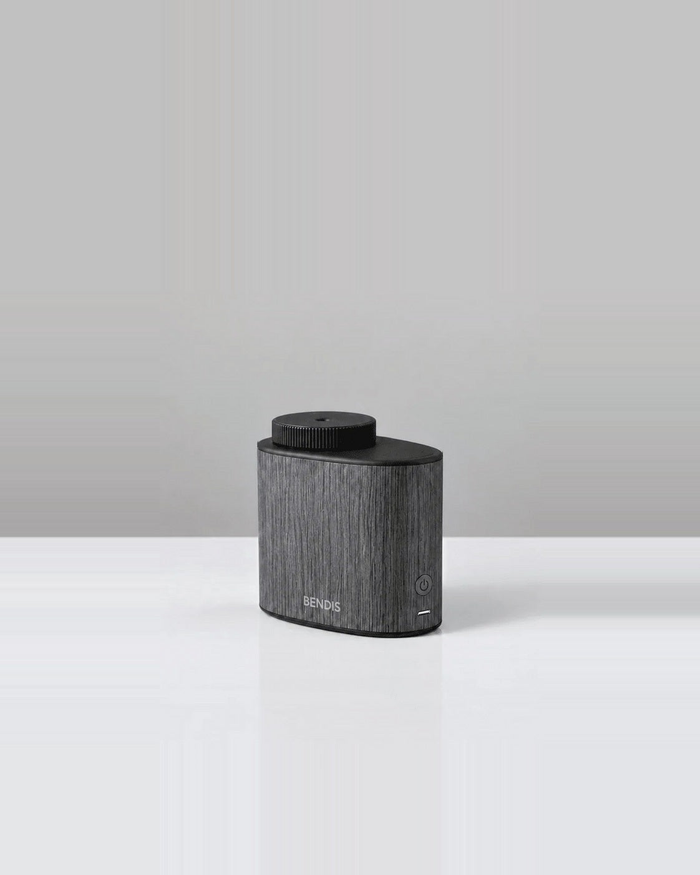
App-controlled models such as the SENSE (up to 80 m², the quietest in the range) or the FLOW (up to 120 m²) let you set intensity, cycles and schedules from your phone: keep it at minimum and off when nobody is around to keep an eye on things. The PULSE (up to 7 m²) has no app and is triggered by presence, including when the cat walks in. That is why in a bathroom with a litter box we only use it with neutraliser and at minimum.
Where should you never put the diffuser?
- Next to the litter box: your cat may stop using it.
- Near the food bowl, water bowl or bed.
- In a closed room with the cat inside, in the carrier or in the car while it travels.
- Within reach: a knocked-over device leaves liquid the cat can step in or lick.
What signs show the scent is bothering your cat?
Sneezing, watery eyes, drooling, coughing, fast or open-mouth breathing, vomiting, lethargy or wobbliness. Also changes in behaviour: avoiding the room, sleeping somewhere else or no longer using the litter box. If you see any of these, switch the diffuser off, ventilate, take your cat into fresh air and call your vet. Difficulty breathing is an emergency.
Neutralise or perfume?
With a cat, neutralise. Almost all the smell in a home with a cat comes from the litter box, and cleaning fixes that: scoop daily, change the litter regularly and ventilate. If some smell is still in the air, the Aloe Vera neutraliser, at minimum intensity and away from the tray, is a better option than a strong fragrance.
Frequently asked questions
Is an aroma diffuser bad for cats?
We cannot tell you it is harmless. It depends on the product, the intensity, ventilation and the cat itself. With essential oils, veterinary sources urge real caution. With a fragrance diffuser: minimum intensity, short cycles and a free way out.
Can I put essential oils in the diffuser if I have a cat?
Veterinary guidance advises against the most problematic ones around cats: tea tree, citrus, eucalyptus, peppermint, pine and wintergreen, among others. If you want to use one, check with your vet first.
Which diffuser is best for a home with a cat?
One with an app and fine intensity control, sized for the room. For a bedroom or living room, the SENSE (€89.99). For a larger home, the FLOW (€79.99). Always at minimum.
Can I leave the diffuser on all night with my cat?
Better not. Schedule it for the hours when you are home and can see how your cat reacts.
What if my cat has asthma?
Talk to your vet before using any diffuser. The Merck Veterinary Manual notes that animals with respiratory disease, such as feline asthma, are at greater risk from inhalation.
Are BENDIS fragrances essential oils?
No. They are concentrated, alcohol-free home fragrances with no therapeutic effect. That does not make them safe for every animal: use them at minimum and, if your vet wants to check them, ask us for the safety data sheet at info@bendis.es.
Other pets at home? Read our guides on using an aroma diffuser with birds, a diffuser with rabbits and rodents and a diffuser with dogs. And everything about odours in neutralising pet odour at home.
Sources
- Merck Veterinary Manual: Toxicoses from Essential Oils in Animals
- Pet Poison Helpline: Essential Oils and Cats
- ASPCA Animal Poison Control Center: essential oils and diffusers
- Shrestha et al. (2011), PLoS One: the UGT1A6 defect in the domestic cat
For information only. Not a substitute for advice from a vet.