A corner of the home you actually want to be in is not the result of a pretty photograph. It comes from looking after the four senses that are active the moment you walk into a room: what you see, what you hear, what you smell and what you touch.
This guide comes with no invented figures and no promises. Only what can honestly be said.
1. Sight: fewer things
It is the sense that dominates the first impression, and the one that suffers most from clutter. Nothing needs renovating: taking objects away, unifying the palette around warm neutral tones and leaving a single visual focal point changes an entire room.
Lighting does half the work. Warm light and several low sources instead of one central ceiling fitting. A floor lamp lit at eye level transforms any corner.
2. Sound: masking what bothers you
At home, sound is almost always a matter of subtraction rather than addition: what bothers you is the traffic, the neighbour, the hum of the fridge. A constant, neutral background (white noise, the sound of rain, music without lyrics) masks those peaks and makes the space feel calmer.
Textiles help more than you would think: a rug and a pair of heavy curtains bring down the reverberation of an empty room very noticeably.
3. Smell: the one almost nobody works on
It is the least designed of the senses and the fastest to act on how you feel in a place, because it reaches the emotional brain without passing through the rational filter.
Two rules, and that is it:
Consistency over intensity. What builds the "this is my place" association is that it always smells the same, not that it smells strong. If you walk in and think "it smells of something in here", it is too high.
One scent per function. One for the work area, a different one for the rest area. Over time your mind associates each one with a state and the transition between them becomes automatic.
Registers that work: citrus and mint to energise; lavender, jasmine or woods for the rest area; green tea if you want something neutral that suits everything.
And a technical warning: if there is an underlying bad smell in the room (damp, a pet, stale air), the fragrance will not cover it, it mixes with it and makes things worse. That is solved with a neutraliser before you add anything else. How neutralisation works.
4. Touch: what you touch without thinking
The surfaces you genuinely come into contact with, the sofa, the blanket, the floor under your feet, the handle of a drawer, count for more in the feeling of comfort than what is on the wall. Warm materials and texture rather than cold, smooth surfaces.
Where to start
With one corner, not with the whole house. Choose one, take objects away, change the light, give it a sound background and keep it smelling the same every day. Within a week you will know whether it works; if it works, you repeat it.
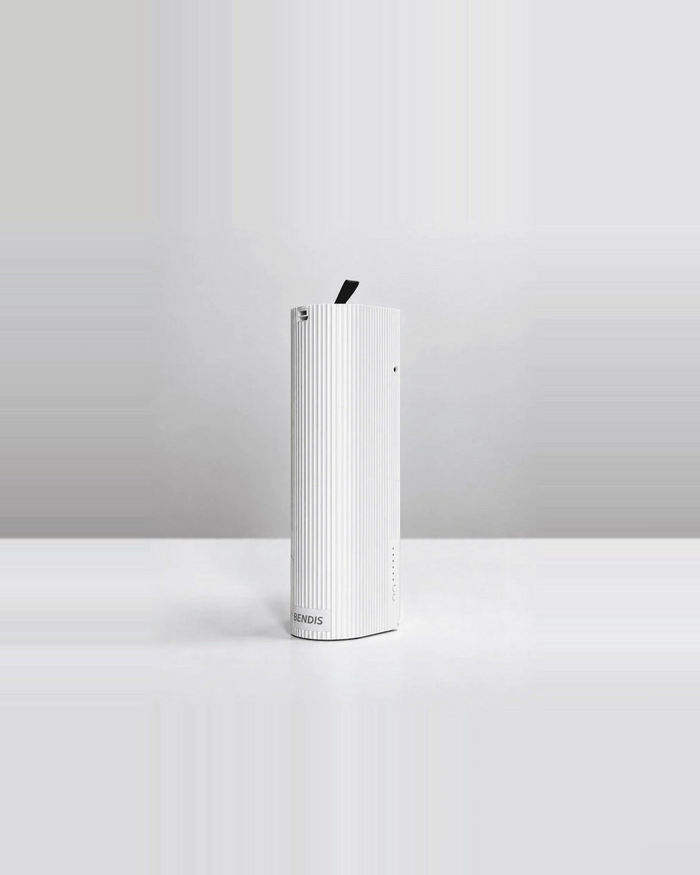
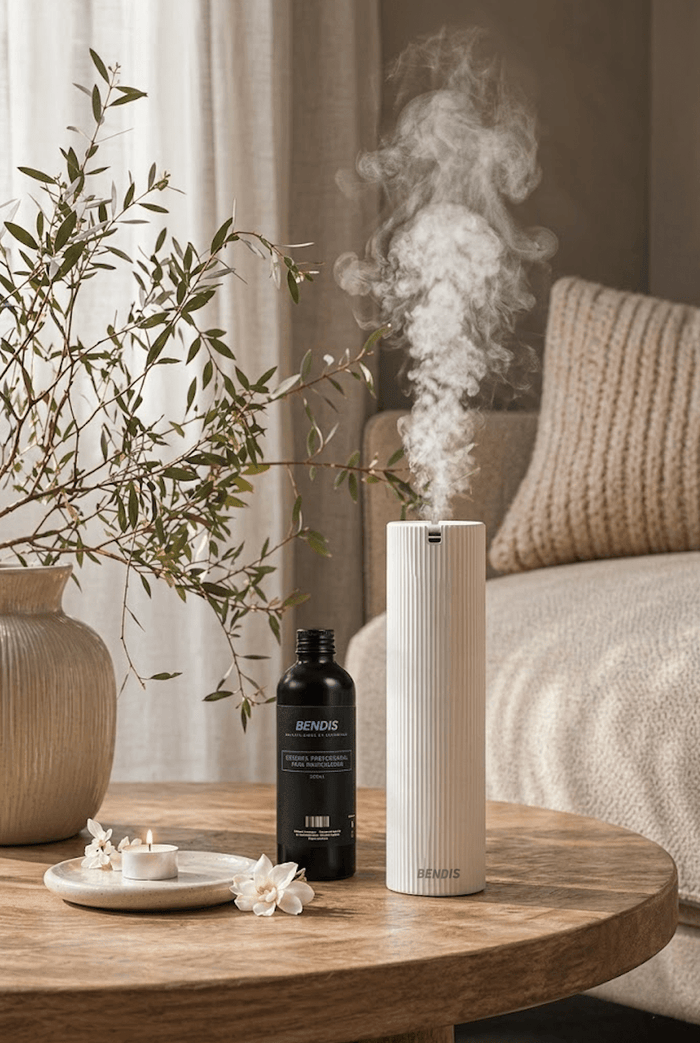
For the scent side of things, BENDIS nebulisers work without water or heat and are scheduled by time slot, so the fragrance is there when you use the space and not when you do not. In the catalogue you will find the coverage of each model, and we send samples beforehand so you can choose by smelling, which is the only way to get it right.