Some smells clear with a bit of ventilation; others come back again and again no matter how much you clean. The smell of drains, rotten eggs or boiled cabbage belongs firmly in the second group, and it almost always has the same chemical culprit: sulphur compounds.
Understanding how they behave explains why an air freshener is no match for them, and what actually works in a business.
What mercaptans are
Mercaptans, also known as thiols, are organic compounds carrying a sulfhydryl group (-SH): a sulphur atom bonded to a carbon. Together with sulphides and disulphides they make up the family of sulphur compounds responsible for a good share of the smells we find most repulsive.
Their defining feature is the detection threshold. The human nose picks them up at minute concentrations, far below those needed for other compounds. That is why ethyl mercaptan is added to natural gas, which is odourless in itself: the tiniest leak is noticed instantly.
Translated to a business, this means you do not need a serious fault to have an odour problem. A very small, constant leak is enough.
Where they come from on your premises
- Drains and waste stacks. Organic matter breaking down without oxygen in the drainage system produces hydrogen sulphide and mercaptans. That gas enters the premises when the barrier separating it fails: usually a trap that has run dry.
- Bin rooms and cold rooms. Meat, fish and shellfish waste release sulphur compounds as they decompose.
- The kitchen. Garlic, onion, leek, cabbage and cauliflower contain sulphur precursors that are released during cooking. It is a food smell rather than dirt, but it clings to textiles just the same.
- Areas with standing water. Inspection chambers, kitchen floor drains, damp basements.
Why an air freshener cannot cope with them
An air freshener adds smell. Faced with a compound detectable at such low concentrations, adding fragrance only produces a worse mixture: both are still perceived, and the combination says exactly the opposite of what you intended.
With this kind of odour, the important work is always at source:
- Keep traps filled with water, especially in floor drains that are rarely used.
- Check seals, inspection chambers and drainage ventilation if the smell persists.
- Take organic waste out daily and wash the bins, not just change the bag.
- Make sure the kitchen extraction is working and the filters are clean.
Where professional neutralising fits in
Once the source is dealt with, the residual odour remains: the one in the air, in the textiles and in the areas where the source cannot be removed altogether, such as a bin room in daily use.
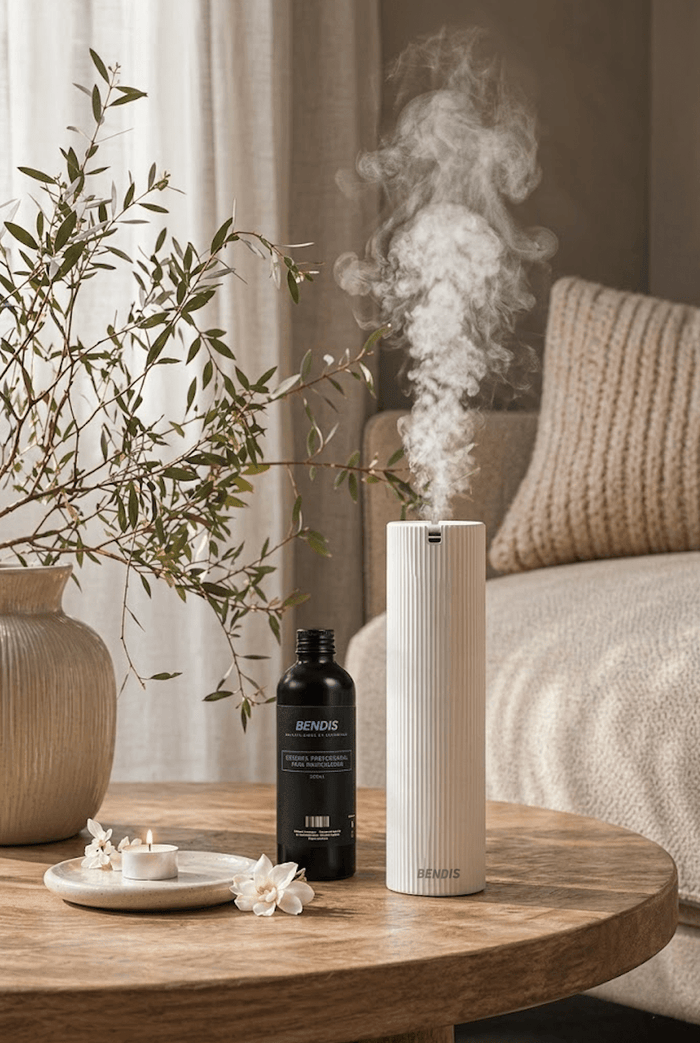
That is where a neutraliser dispersed by cold nebulisation works, continuously and on a schedule rather than in one-off bursts. In our catalogue that job is covered by three formulas (Aloe Vera, Cotton Fresh and Jasmine Neutral) designed for washrooms, kitchens, bin rooms and damp areas.
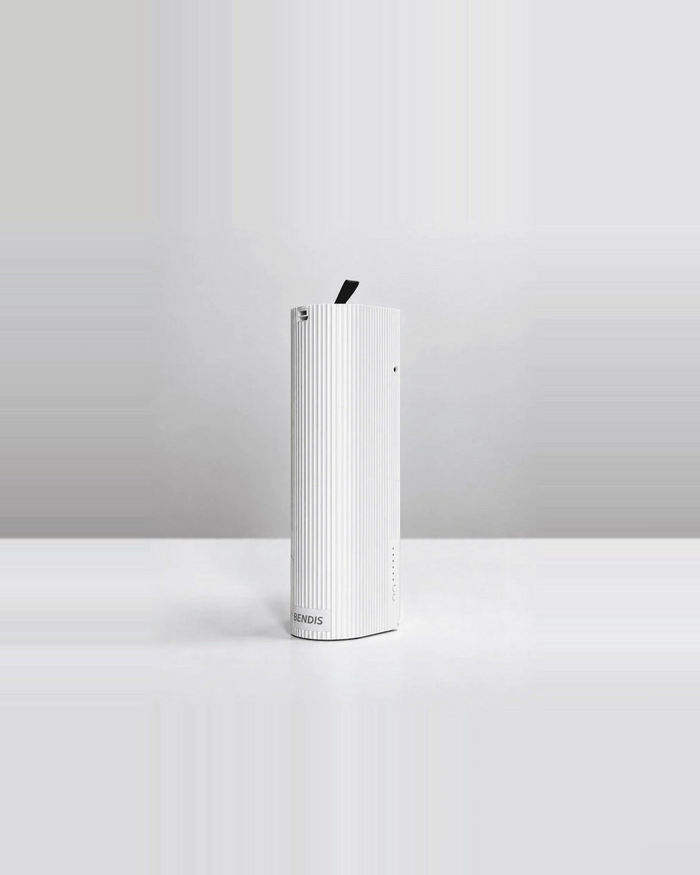
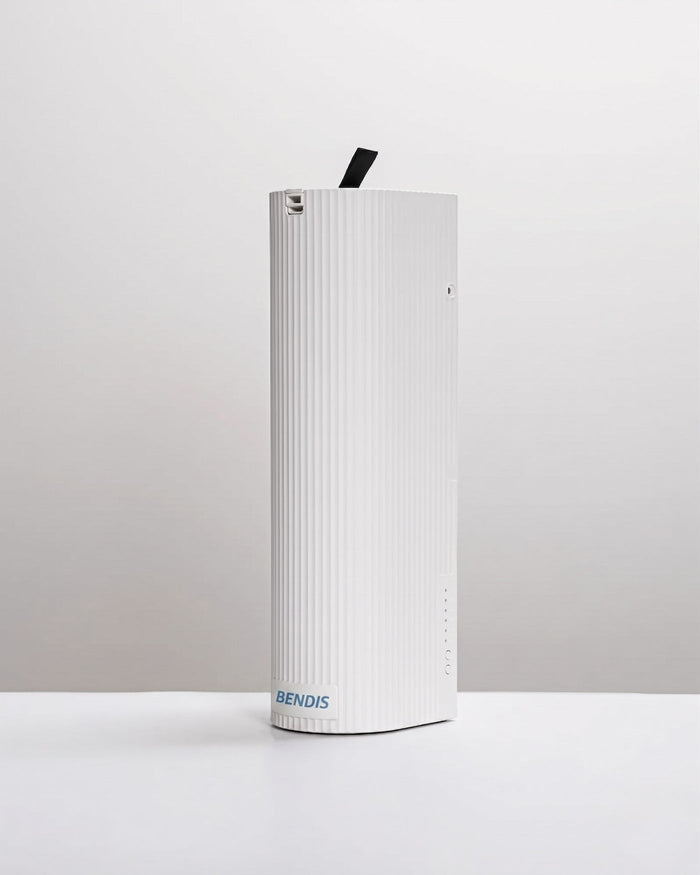
The unit is chosen by square metres: for a washroom a PULSE (7 m²) is enough; a kitchen or a medium-sized store room falls into the FLOW range (120 m²). You can see them all on the diffusers page.
Only once the air is clean does it make sense to move on to the fragrance of the customer areas. That is the order, and it allows no shortcuts: neutralise first, scent afterwards.
A note on what we do not do
We are not a cleaning company or a plumbing firm. We do not treat drainage systems and we do not carry out industrial remediation. What we bring is the equipment, the formulas and the judgement to size them, on a monthly scenting plan from €29.90/month + VAT per unit with refills included and no minimum term, or to buy.
If you have an odour of this kind and do not know where to start, tell us about it through contact and we will tell you which part is yours and which part is ours. You can also read the complete guide to eliminating bad odours in a business.