In short
- The "care home smell" is not one smell: it is degraded urine, used pads, textiles, food and stale air, sometimes with cheap perfume on top.
- It comes back even with good cleaning because the source is continuous and staff get used to it and stop noticing.
- It is removed in this order: source, enzymatic cleaning, ventilation and, last, a cold-air nebulised odour neutraliser in the air.
- An air freshener makes it worse: perfume over urine is exactly the smell families recognise.
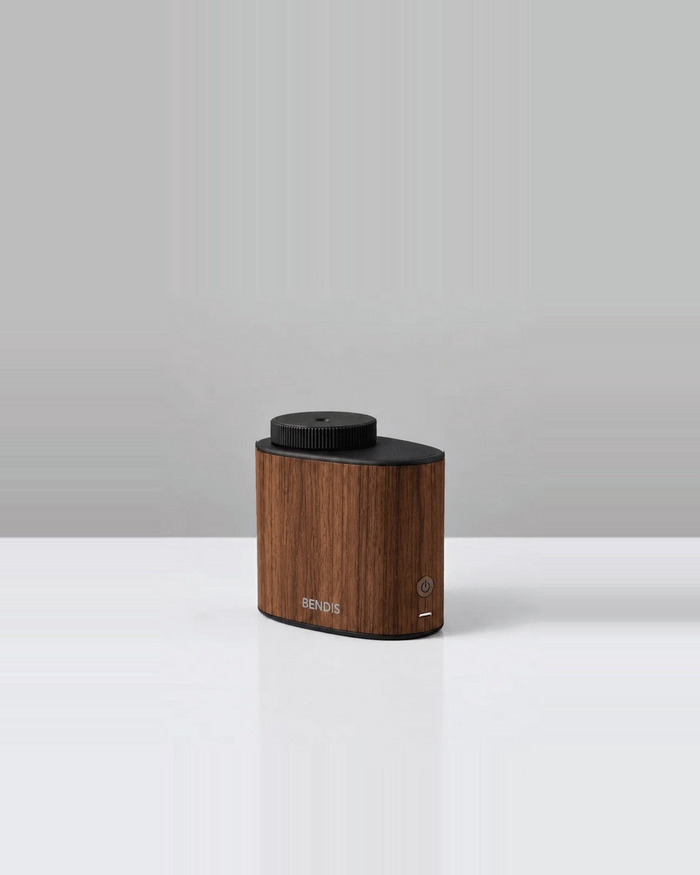
- With BENDIS, diffusers from 72,99 € (VAT incl.). In Spain and Portugal there is also a monthly plan from 29,90 € + VAT per zone.
Families describe it the same way in every city: "it smells like a care home". Nobody needs to explain it, we all know what it means. And it is usually unfair to the home, because behind it there is often a team that cleans every day and changes pads on time. The problem is that the smell has several sources that add up, and if you tackle only one, the others are still there.
What exactly is the care home smell?
It is a mix of five odours that reinforce each other: urine (when urea breaks down, ammonia appears, which is what stings the nose), used pads and soiled laundry waiting to be collected, textiles that hold odour (mattresses, curtains, armchairs), food from a communal kitchen and poorly renewed air. Many homes add a sixth layer: the cheap air freshener used to cover it.
None of them is serious on its own. Together, in a building with many older people and little fresh air in winter, they create that recognisable background that stays on visitors' clothes.
Why does it come back even with good cleaning?
Because the source is continuous and because the sense of smell adapts. A care home has residents with incontinence every day, at all hours; the British Geriatrics Society good practice guide assumes that many residents will have some degree of urinary incontinence. Cleaning removes the smell of that moment, not the one produced an hour later.
- Porous textiles. Mattresses, lounge armchairs and curtains absorb odour and release it for days.
- Traps and grout. A drain trap that dries out or porous tile grout in an assisted bathroom is a permanent source.
- Laundry trolleys and the waste room. They travel along corridors or sit next to circulation areas.
- Limited ventilation. In winter windows are opened less so residents do not get cold, and the air becomes heavy.
- Olfactory adaptation. Someone who works eight hours on a floor stops perceiving the smell. Someone coming in from the street notices it in the first second.
Where does each odour come from and what do you do about it?
Each odour has its source and its treatment. This is the table we use to guide care home managers:
| Odour | Usual source | Where it builds up | What to do first | Neutraliser in the air |
|---|---|---|---|---|
| Urine, ammonia | Incontinence, pads, floors and mattresses | Bathrooms, rooms of high-dependency residents | Timely changes, enzymatic cleaning, waterproof covers | Jasmine |
| Faecal and sweat | Personal care, soiled laundry | Assisted bathrooms, laundry, trolley corridor | Closed trolleys emptied often | Cotton Fresh |
| Food | Communal kitchen, purées, fried food | Dining room and kitchen corridor | Kitchen extraction and airing after service | Jasmine, outside mealtimes |
| Damp and stale air | Ground floors, basements, little cross ventilation | Lounges, rehabilitation gym | Check for damp and renew the air | Aloe Vera |
| Rubbish | Bins for pads and organic waste | Waste room | Lidded bins and daily removal | Jasmine |
If urine is the main problem, the detailed protocol is in how to remove urine smell in a care home, zone by zone.
How do you remove the care home smell, step by step?
In four layers and in this order; skip one and the others will not work.
- The source. Pad change routines, washable waterproof mattress covers, closed laundry trolleys and lidded bins. This is the home's job and the most important part.
- Cleaning. Enzymatic products on floors, grout and mattresses affected by urine; bleach whitens but does not always remove the smell of degraded urea. Check traps that dry out.
- The air. Air the rooms every day and check that mechanical ventilation works. Spain's building regulation (RITE) puts care homes in indoor air quality category IDA 2, with a reference flow of 12.5 litres per second per person; check the equivalent standard in your country.
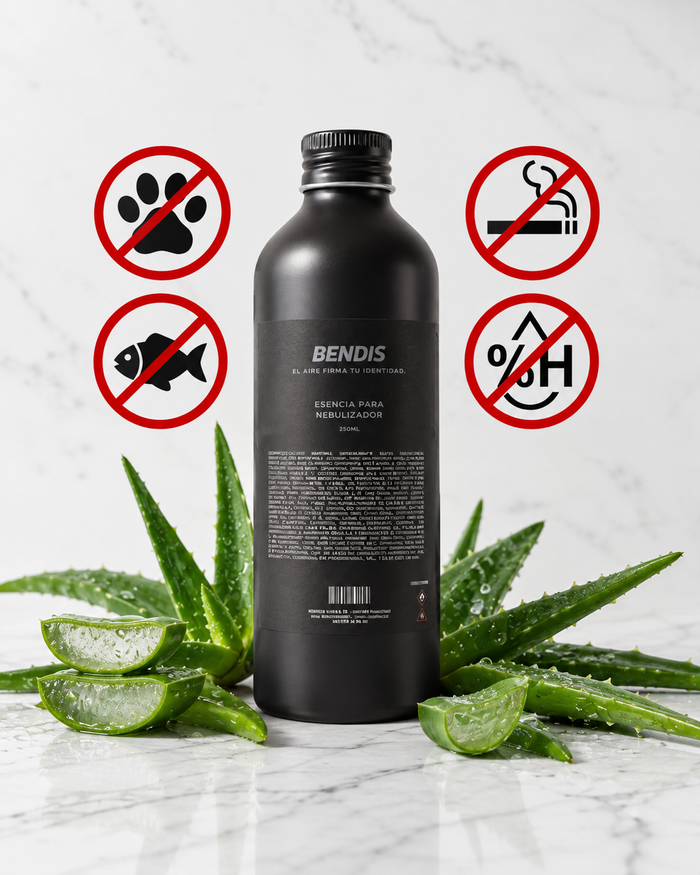
- The remaining odour. A cold-air nebuliser loaded with odour neutraliser, at low intensity and scheduled by time slots, works continuously on the malodour molecules. It keeps the result between one clean and the next.
Only when the problem areas are under control does a soft fragrance make sense, and only in reception and the visitors' lounge.
Why does an air freshener make the care home smell worse?
Because it removes nothing: it adds perfume on top and the result is urine with perfume. The Spanish consumer organisation OCU puts it clearly in its report on air fresheners: they do not clean the air or remove odours, they only mask them, and it advises against using them near people with asthma or allergies or in unventilated rooms. In a care home there is another problem: a spray lasts minutes and a plug-in does not reach a whole corridor.
A neutraliser works the other way round: its goal is to make something stop smelling bad, not to make it smell of something else. We compare both in detail in air freshener or odour neutraliser: what a care home needs.
Is it safe to diffuse neutraliser where older people live?
Yes, if it is done with judgement: low intensity, into the air and with the home's clinical team deciding.
- Units are delivered set to low intensity and mounted high, out of reach (there is a wall mounting kit).
- Never nebulise onto people, food or medication.
- For residents with COPD, asthma or other respiratory conditions, the nursing team decides and their area can be left without a unit.
- We send the safety data sheet for every product for your health and safety team.
And an honest note: scenting improves comfort and how the home is perceived, but it is not a treatment. The Cochrane review on aromatherapy for dementia (13 trials, 708 participants) found no convincing evidence of benefit. Which scent families suit common areas is covered in which scents to use in a care home.
How much does it cost to remove the care home smell?
From 72,99 € (VAT incl.) per diffuser if you buy the unit; in Spain and Portugal also from 29,90 € + VAT per zone per month with the monthly plan. The monthly plan includes the unit, each month's neutraliser or fragrance and shipping, with no minimum term, and is only available in Spain and Portugal. In the rest of Europe you buy the unit.
| Zone | Unit | Purchase (VAT incl.) | Monthly plan (Spain and Portugal only) |
|---|---|---|---|
| Shared or assisted bathroom | PULSE (up to 7 m²) | 72,99 € | 29,90 € + VAT |
| Lounge or room with incontinence | SENSE (up to 80 m²) | 89,99 € | 34,90 € + VAT |
| Reception | LUME (up to 100 m²) | 109,99 € | 37,90 € + VAT |
| Corridor or dining room | FLOW (up to 120 m²) | 79,99 € | 39,90 € + VAT |
| Whole open-plan floor | ORBIT (up to 600 m²) | 149,99 € | 54,90 € + VAT |
Neutraliser refills cost 29,99 € (150 ml) and 34,99 € (250 ml) including VAT. To work out how many units your home needs, see how many diffusers a care home needs; the monthly plan is explained in monthly scenting plan.
Frequently asked questions about the care home smell
Why do so many care homes smell the same?
Because they share the same sources: incontinence, communal cooking, textiles and buildings that are aired little in winter. And because many use the same kind of air freshener to cover it, which adds a recognisable perfume on top.
Does a care home smell mean the home is dirty?
Not necessarily. A very clean home can smell like this if the source is continuous and the air is not treated. What it does show is that a layer is missing: ventilation, neutralisation or both.
Which neutraliser works best for urine?
Jasmine, which tackles urine, drains, rubbish and food residue. In the laundry and areas with faecal odour, Cotton Fresh. For damp and stale air, Aloe Vera.
How long until you notice the difference?
In the air, from the first day of use in the treated area. If the source is in a mattress or grout, it will not disappear completely until that source is dealt with.
Can it be used in residents' rooms?
Only if management asks for it, in the rooms that really need it and at minimum intensity. In most homes, bathrooms, corridors and common areas are enough.
Do I need a site visit?
No. We work remotely: send us photos and the size of each area by WhatsApp, to info@bendis.es or call +34 911 09 70 50, and the units arrive already configured.
More on care homes: scenting and odour neutralisation for care homes · urine odour in care homes · odour neutraliser for adult day care centres · odour neutralisation.
Sources
- British Geriatrics Society, Continence care in residential and nursing homes.
- OCU, report on air fresheners (in Spanish).
- Ball EL et al. (2020), Aromatherapy for dementia, Cochrane Database of Systematic Reviews.
- Spanish Regulation on Thermal Installations in Buildings, RD 1027/2007 (BOE), IT 1.1.4.2.
Written by the BENDIS Team.