Short answer: an air freshener or fragrance adds a smell to a space that is already clean; a neutraliser acts on the molecules behind a bad odour so they stop being noticed. If your venue smells of something specific (frying, damp, tobacco, bins, toilets), you need a neutraliser. If it smells of nothing, fragrance. And if it has both, each one goes in its own area.
Almost everyone calls anything sprayed into the air an "air freshener". But these are two different products doing two different jobs, and mixing them up is one of the most common reasons a venue still smells bad after spending money on scenting it.
What each one does
An air freshener or fragrance adds a smell. It works on a space that is already clean and gives it an identity. It is what you want in a hotel entrance, a shop or a restaurant dining room.
A neutraliser is not there to add perfume: it acts on the molecules that cause the bad odour so they stop being perceived. It is what you want in a toilet, a changing room, a bin store or a damp area.
Spray fragrance over a bad smell and for ten minutes you smell both at once. Then the fragrance fades first and you are back where you started, except now the customer links your scent to the problem.
| Fragrance | Neutraliser | |
|---|---|---|
| What it does | Adds a scent | Reduces the perceived bad odour |
| Where it goes | Entrance, dining room, shop, reception | Toilets, changing rooms, bin stores, kitchen, damp areas |
| Over a bad odour | Mixes with it and makes it worse | That is its job |
| Goal | Identity and welcome | Nothing unpleasant to smell |
How to tell which one you need
Try this test. Walk into the venue in the morning, with everything shut since the night before, and breathe in before you touch anything:
- If nothing in particular stands out, what you need is fragrance.
- If you smell something specific that bothers you (frying, damp, tobacco, animals, rubbish), what you need is a neutraliser.
- If you smell both depending on the area, you need both, but in different places.
Which neutraliser for which odour
Not all bad smells are the same, and each neutraliser is designed for one type:
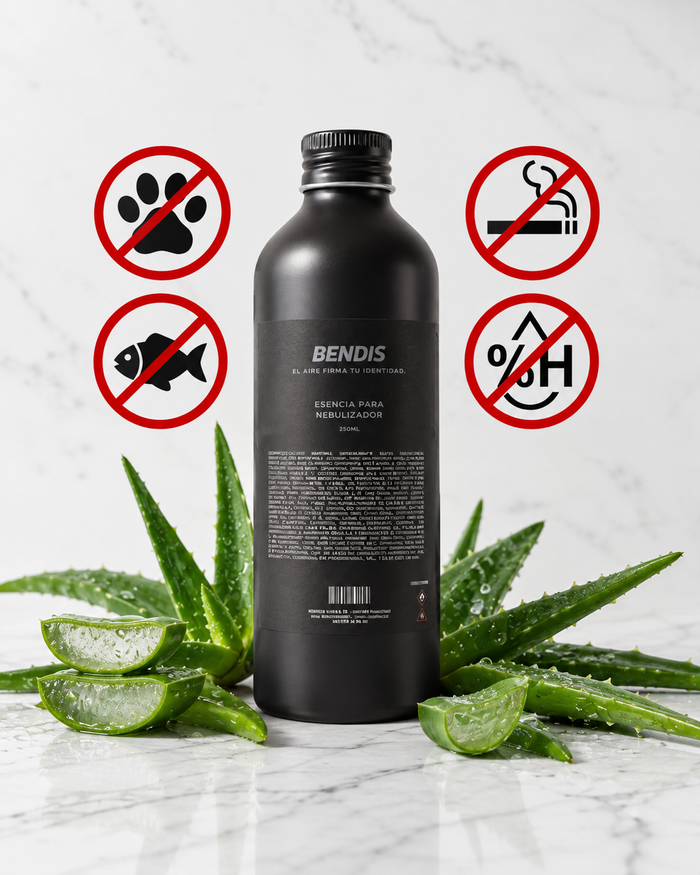
- Aloe Vera: pets, damp and tobacco. Vet clinics, dog day care, older flats, hotel rooms.
- Cotton Fresh: smoke, toilets and sweat. Washrooms, changing rooms, gyms.
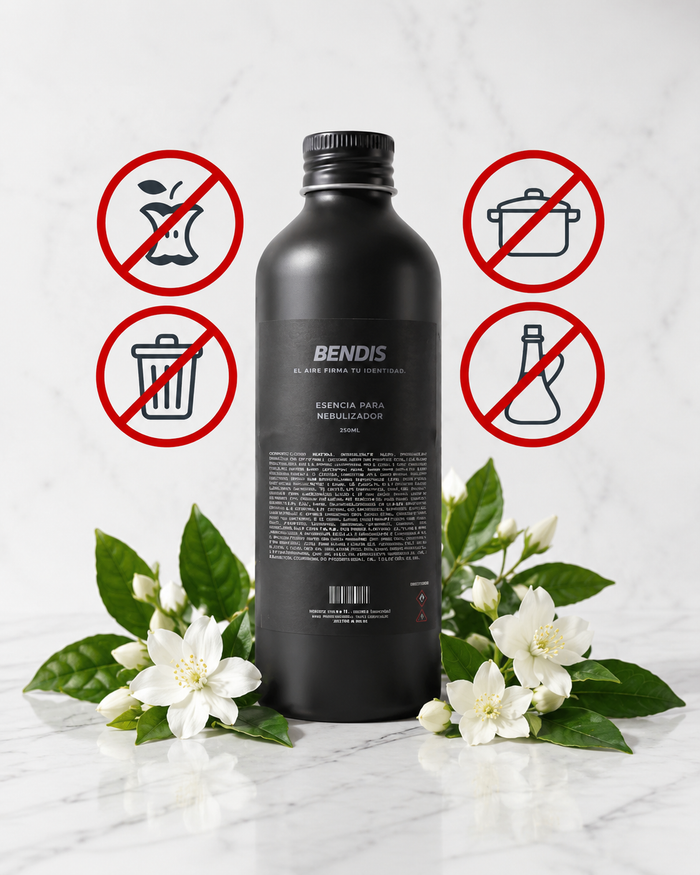
- Jasmine: rubbish, food and drains. Kitchens, bin stores, restaurants, drains.
You will find the full guide in which odour neutraliser to choose for each type of smell, and how we work with businesses in professional odour neutralisation.
The combination that does work
Neutralise at the source and add fragrance in the front-of-house areas. In a restaurant that means a neutraliser in the toilets and in the passage towards the kitchen, and fragrance at the entrance and in the dining room. In a gym, a neutraliser in the changing rooms and fragrance on the training floor and at reception.
The two units do not clash because they do not share a space. What never works is loading both products into the same machine or putting them in the same room.
A couple of things that help more than any product
Before buying anything, check the traps on the drains, how often the bins are emptied and the extraction in the toilets. A dry trap sends sewer smell back into the venue, and no neutraliser can beat an active source. Scenting works well on a space that is already in good condition.
Which equipment to use
The same diffusers handle both jobs: what changes is the product you load. In a toilet a compact unit such as PULSE (7 m²) is enough. For a medium-sized venue, LUME (100 m²) or the FLOW diffuser (120 m²). For warehouses or large rooms, ORBIT (600 m²) or higher-output units. The full range is in the diffuser catalogue.
If you are in Spain or Portugal and would rather not buy the unit, the monthly scenting plan includes the equipment plus neutraliser or fragrance every month from €29.90 per month + VAT, with no minimum term.
Frequently asked questions
Does a neutraliser smell of anything?
It has a soft note, but its job is not to perfume, it is to reduce the bad odour. That is why ours carry names such as Aloe Vera, Cotton Fresh or Jasmine: it is the note left in the background.
Can I mix fragrance and neutraliser in the same diffuser?
No. Each product in its own unit and its own area. Mixed together, neither does its job properly.
Does a neutraliser replace cleaning?
No. It reduces odour between cleans, but if there is an active source (a dry trap, rubbish piling up) that has to be fixed first.
Tell us what you can smell and where, at info@bendis.es, and we will tell you whether your case calls for fragrance, a neutraliser or both. The most common questions are answered in our FAQ.