Smell is the sense a business plans for least and the first one to settle the initial impression. A frying smell at the entrance, damp in the fitting room or a drain smell in the toilet registers in seconds, and no amount of decor makes up for it.
This guide explains where the bad smells in commercial premises really come from, what cleaning and ventilation will solve, and at what point it makes sense to bring in a professional neutralising and scenting system.
Smell is not just hygiene: it is a commercial decision
A bad smell affects four things you really do notice: the perception of cleanliness, how long the customer stays inside, whether they feel like coming back, and what they say afterwards. In hospitality, retail, gyms, clinics or offices open to the public it counts for as much as the lighting or the music.
It is worth saying without overstating it: there is no magic figure that turns a good smell into more revenue. What is consistent is the opposite: an unpleasant smell takes away, and it takes away fast.
Where bad smells in commercial premises come from
- Waste pipes and dry traps. A drain that is rarely used loses the water in its trap and lets the sewer smell through. It is the number one cause of the "it smells like a drain" complaint in toilets and back rooms.
- Bin rooms and bins. Organic waste + temperature + poor ventilation.
- The kitchen. Frying grease settles into textiles, suspended ceilings and ducts; the smell is still there long after the cooking has stopped.
- Damp and mould. Leaks, basements, unventilated storerooms.
- High-turnover toilets. The problem is not the individual clean, it is the interval between cleans.
- Textiles. Carpets, curtains and upholstery build up food, smoke and damp odours.
- Animals. Veterinary clinics, dog day care and pet shops have their own constant odour profile.
What you can fix without buying anything
Before considering any equipment, there are measures that solve a good part of the problem:
- Run water into rarely used drains from time to time to keep the trap full.
- Take the organic waste out daily, not when the bin is full.
- Check the extraction and hood filters as often as the manufacturer specifies.
- Keep humidity under control and deal with leaks at source.
- Clean textiles and upholstery at a realistic frequency, not a theoretical one.
Home remedies (bicarbonate of soda, coffee beans, vinegar, lemon) work in a cupboard or a domestic bathroom. In premises with people coming and going they fall short: the source starts emitting again within minutes.
Neutralising and scenting are not the same thing
This is the most common confusion and the one that ruins the most installations. A neutraliser is a formula designed to reduce the perception of one specific bad smell. A fragrance is identity: what you want the customer to associate with your brand.
Laying scent on top of a bad smell does not remove it, it creates a worse mixture. The right order is always the same:
- Act on the source (cleaning, waste, damp, extraction).
- Make sure the ventilation works.
- Neutralise in the critical zones: toilets, bin rooms, kitchen, storeroom.
- Scent the customer zones: entrance, dining room, reception, fitting rooms.
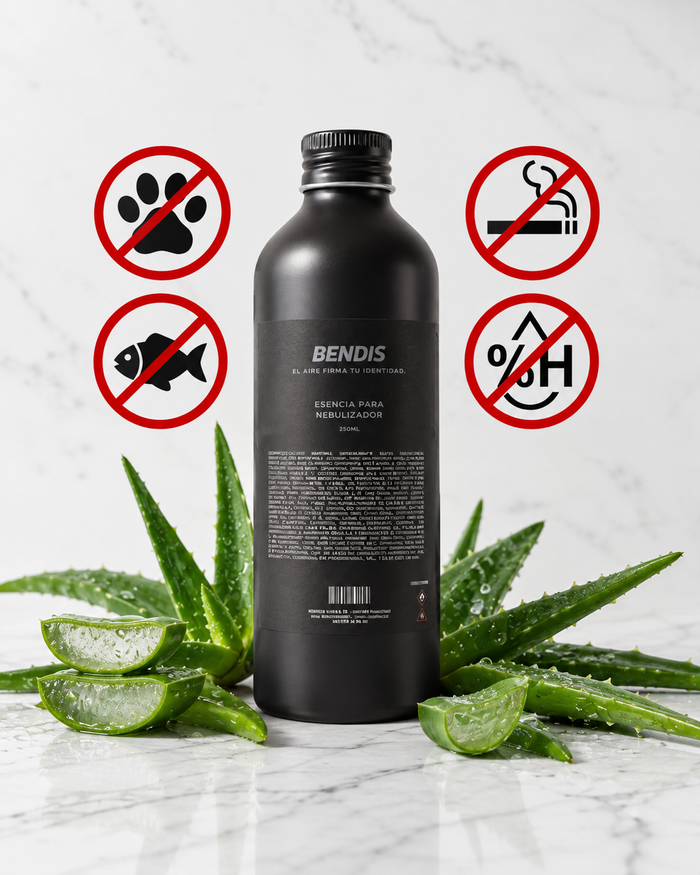
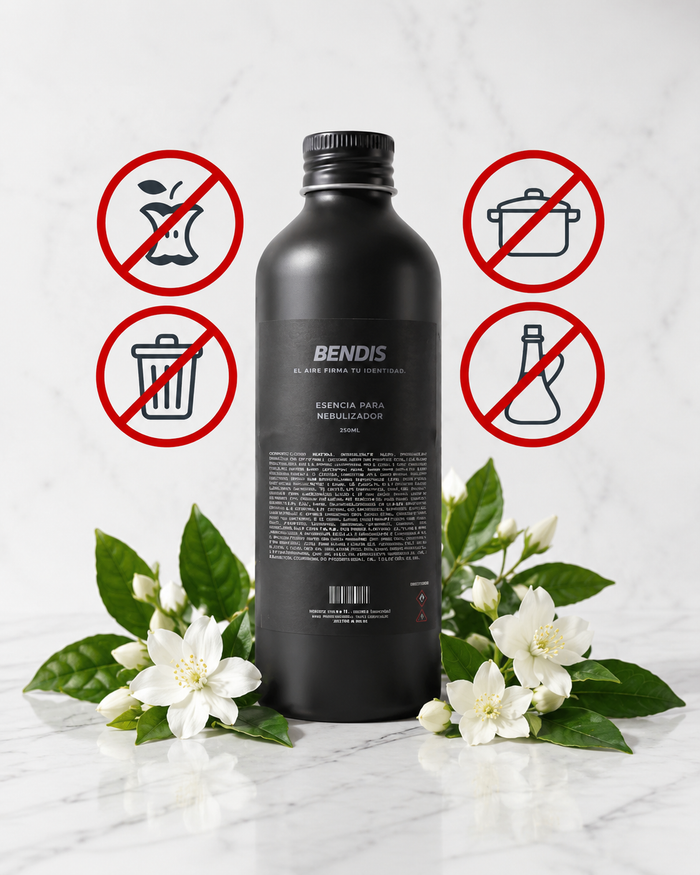
In our catalogue that first layer is covered by three neutralisers: Aloe Vera, Cotton Fresh and Jasmine Neutral. The second, by the fragrance range.
How it works in practice
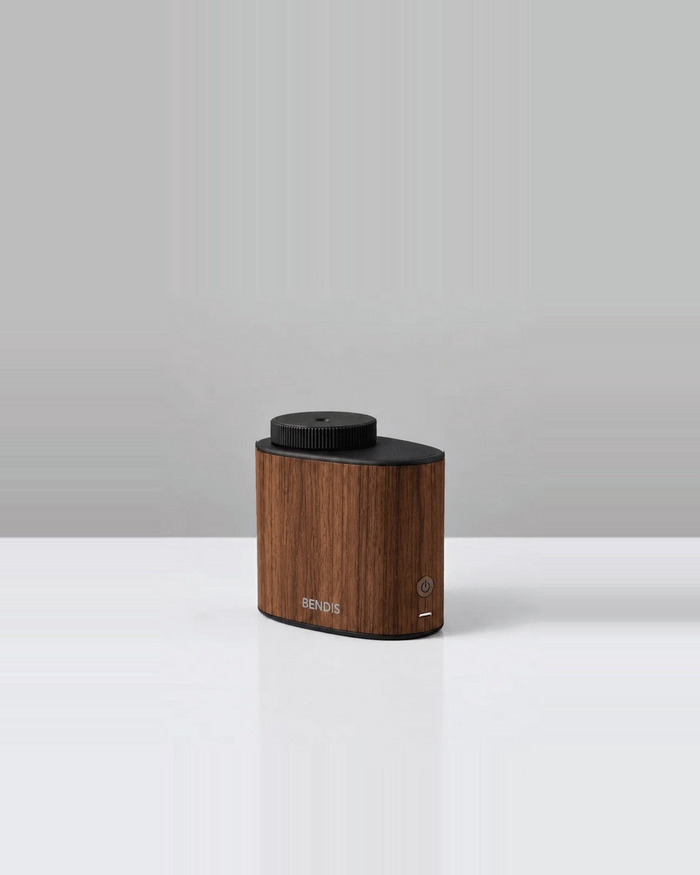
Professional scenting uses cold nebulisation: the concentrate is broken into a very fine particle with no water and no heat, and dispersed through the air of the room. It does not wet anything, leaves no residue and does not dilute the fragrance.
The deciding factor is the surface area to be covered, not the price of the device. For reference, in our range: PULSE covers 7 m² (ideal for a toilet), FLOW 120 m², ORBIT 600 m², HALO 800 m² and NOVA up to 1,600 m². You can see the specifications for each one on the diffusers page.
Each unit works on its own or connected to the air conditioning ducts, and is programmed by time slot so that it only runs when there are people in.
For businesses, the usual formula is the monthly scenting plan: from €29.90/month + VAT per unit, with refills included and no minimum term. No building work and no installation: the units are shipped ready to plug in.
Five mistakes that keep coming up
- Turning up the intensity to cover a smell instead of dealing with the source.
- Putting the unit in a dead corner, away from the airflow.
- Using the same fragrance in the kitchen and in the dining room.
- Changing the scent every month: brand association needs repetition.
- Assuming the system replaces cleaning. It does not, it works alongside it.
Keep reading
- The hardest smells in commercial premises, one by one
- Professional nebulisers: how to choose the unit for your space
- Zone-by-zone checklist for keeping odour under control
Do you have a specific odour problem? Tell us which zone it is and what it smells like and we will tell you what you need, with no obligation: contact. We cover the whole of Spain, Monday to Saturday from 10:00 to 20:00.