Short answer: to remove the damp smell from a basement, storage room, ground floor or village house that has been closed for months, first open up and create a draught, find the source (leaks, condensation, mould), lower the humidity with airing and a dehumidifier and, once it is dry, neutralise the air with the Aloe Vera neutraliser. If there is widespread mould, call a professional first.
This guide is about spaces that stay closed for long periods or sit below street level. If the damp smell is in the home you live in every day (a wardrobe, a bedroom, the bathroom), see the guide on how to remove tobacco and damp smells from your home. If it is a business, see how to remove damp smells in commercial premises.
Why basements, ground floors and closed houses smell damp
Several causes usually come together, which is why tackling just one does not work:
- Walls that draw water from the ground. Very common in ground floors, basements and old uninsulated houses.
- Condensation. Cold walls and still air: water stays on the surface.
- Nobody airs the place. A village house or second home closed for months builds up damp air.
- Old pipes with small leaks you cannot see.
- Stored things: cardboard boxes, mattresses, clothes and wooden furniture that absorb moisture and give it back as smell.
Damp or mould: the difference matters
A damp smell comes from wet porous materials. A mould smell is stronger and more acrid, and appears when the fungus is already growing. If there is active mould, it will keep smelling whatever you do to the air. It has to be treated first.
How to open a house that has been closed for months
The first day makes a big difference. This is the order that works:
- Open everything and create a cross draught. Windows and doors on opposite sides, plus wardrobes and drawers.
- Refill the traps. Run the taps and flush the toilet. A dry trap lets drain smells through, which are easily confused with damp.
- Check for stains and leaks. Walls, ceilings, under sinks and around windows. Look behind furniture pushed against the wall.
- Put whatever you can out in the sun: mattresses, cushions, rugs and blankets.
- Throw away wet cardboard. Damp boxes do not recover and smell for weeks.
Airing and dehumidifier
Air the place every day, even when it is cold. Cold outside air usually carries less water than warm, stale indoor air, so replacing it helps things dry. Better in the morning and with a draught, which renews far more air in a short time than a window left ajar all day.
In basements, storage rooms and ground floors where you can hardly ventilate, a dehumidifier is the key tool. Empty the tank often and keep everything closed while it works, because if damp air comes in from outside it will not make progress.
| Space | What to prioritise |
|---|---|
| Basement | Dehumidifier, check walls and move boxes away from the wall |
| Storage room | No cardboard on the floor, shelves away from the wall, open it whenever possible |
| Ground floor | Check for rising damp and condensation on windows |
| Village house or second home | Open everything up, refill traps, textiles in the sun and daily airing for the first few days |
When to call a professional
- The mould covers a large area or comes back soon after cleaning.
- Stains rise from the floor or white salts appear on the wall.
- There are roof leaks, seepage or a pipe losing water.
- Paint is bubbling or plaster is crumbling.
- You have dried, aired and cleaned, and the smell is still the same.
In those cases the problem is structural or in the plumbing, and no air product will fix it.
Neutralising the smell that remains
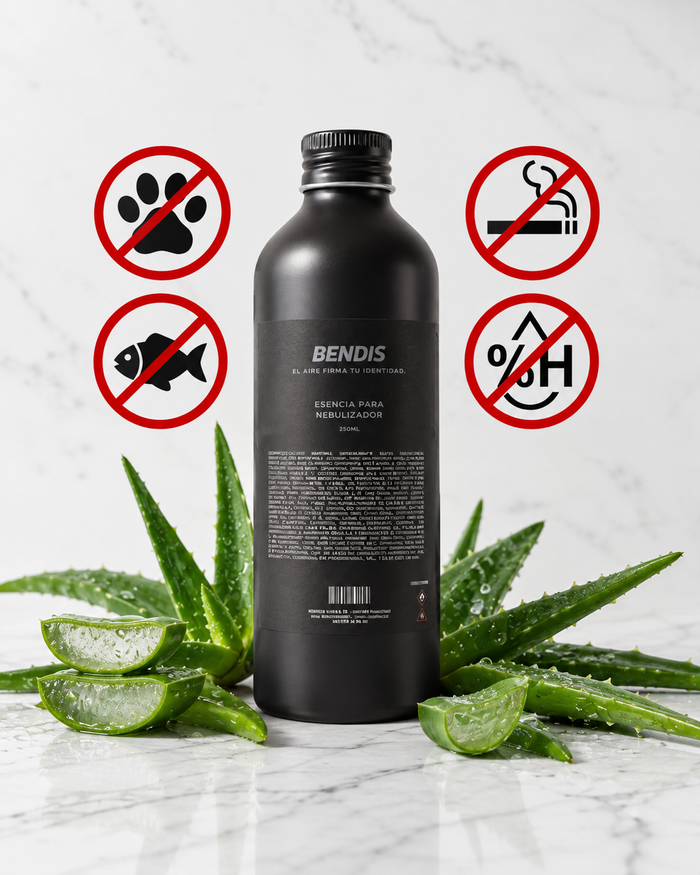
With the source under control, some smell always remains in the air and in materials. That is where a nebuliser with a neutraliser really helps: Aloe Vera is designed for damp, tobacco, pets and fish, and acts on the bad smell instead of covering it. Neutralise first. If you then want a scent, switch to a fragrance.
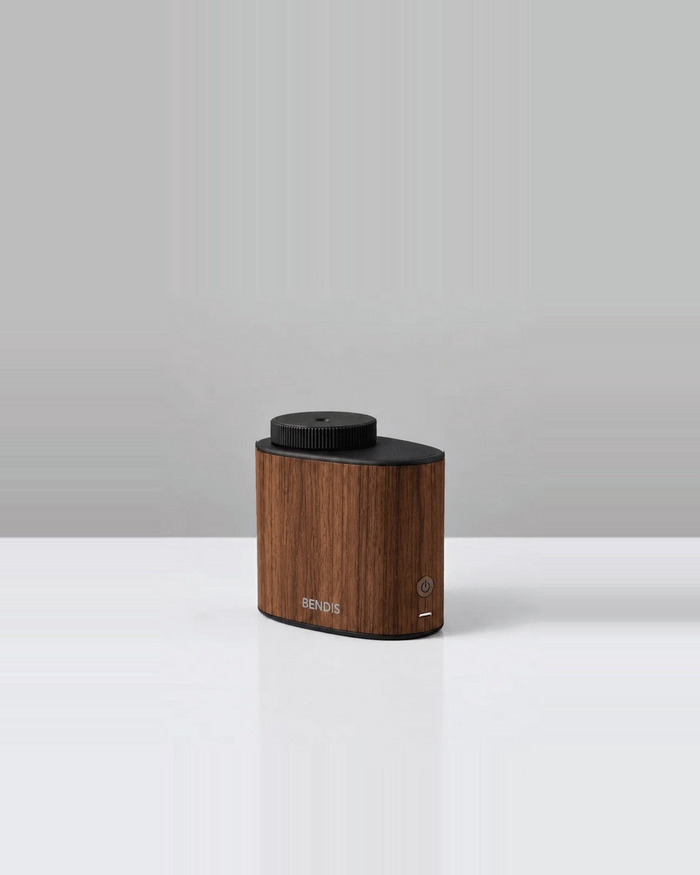
- Small storage room: BENDIS PULSE, up to 7 m², with one D battery and a presence sensor.
- Basement or ground floor without a nearby socket: BENDIS FLOW, up to 120 m², with batteries (up to 81 days) or USB-C.
- House with several rooms: one device per affected area. More options in the home collection.
The refill costs €29.99 for 150 ml and €34.99 for 250 ml. A 250 ml bottle lasts around two months in normal home use, less if the device runs 24 hours on high. Refills are not diluted in water.
If people have also smoked in that flat and you are going to rent or sell it, see the guide on tobacco smell in a flat before renting or selling. And if you are not sure what kind of smell you have, the guide to choosing a neutraliser by type of smell.
Frequently asked questions
How do you remove the damp smell from a storage room?
Empty it, throw away damp cardboard, clean the floor and walls, keep things away from the wall and air it when you can. If it still smells, a small diffuser with Aloe Vera neutraliser, such as the PULSE, keeps the air under control.
What should I do when opening a village house closed all winter?
Open everything with a cross draught, refill the traps, put mattresses and textiles in the sun, check for stains and air it daily for the first few days. Once it is dry, neutralise any remaining musty smell.
Does a dehumidifier remove the damp smell?
It removes water from the air, which is the root of the problem, but the smell already held in walls and objects takes time to go. The usual approach is to combine it with airing and a neutraliser.
Can I use an air freshener in a basement?
It does not help much. The fragrance mixes with the damp and the result smells worse. Better to neutralise first and add a scent afterwards, if needed.
When is it mould and not just damp?
If you see black, green or white patches with texture and the smell is strong and acrid, it is mould. If it covers a large area or comes back after cleaning, consult a professional.