The environment where people work or study is not neutral. Temperature, light, noise and scent all influence attention, information retention and performance. Research on smell and cognition is still young and should be taken as guidance rather than a promise, but it points fairly consistently to the idea that some scents help.
The link between smell and mental performance
The olfactory nerve connects directly to the hippocampus, the seat of memory, and to the prefrontal cortex, responsible for sustained attention and decision-making. No other sense has that direct access.
When the right scent is present, the brain receives an activation signal that improves alertness without creating tension. It is a gentle nudge, not a stimulant.
The three activators with the strongest evidence
Rosemary. The most studied in academic settings. Its active components (above all 1,8-cineole) are linked in several studies to improvements in working memory and processing speed. Sample sizes tend to be small, so treat it as a promising line of research rather than a settled fact.
Mint. Associated with greater sustained attention, especially in monotonous or repetitive tasks. In administrative work, it helps carry you through a long day.
Citrus (lemon, bergamot). They create a positive state of alertness without the tension of a stimulant. They are the most versatile option for spaces with a high turnover of people.
What is beyond debate is the opposite: a space that smells bad creates an immediate negative perception, and that affects anyone who spends eight hours inside it.
Applications by type of space
Academies and training centres. The sensory environment shapes how students associate the space with learning. A classroom with a consistent scent sets up positive conditioning: the brain learns to switch into focus mode when it recognises that environment. The key is consistency, not intensity.
Offices. Long days erode concentration. Citrus and menthol notes counteract that effect without interrupting work. Here the intensity has to be especially low: people spend many hours at a stretch, and what feels pleasant in a shop for five minutes can be invasive here.
Coworking spaces. A shared space needs an identity that justifies choosing it over working from home. Scent helps build that identity and makes the space memorable.
Meeting rooms. A client's or a candidate's first impression forms in the first few seconds. Walking into a room still heavy from the previous meeting communicates neglect without anyone saying a word.
The points to sort out first
In an office or a study centre, there are usually three odour sources: the coffee and microwave area, the toilets and rooms without ventilation. If those are not dealt with, adding scent does not help: it mixes with the problem and makes the perception worse.
The right approach is a neutraliser at the sources and an activating scent in the working areas. How neutralisation works.
How to implement it
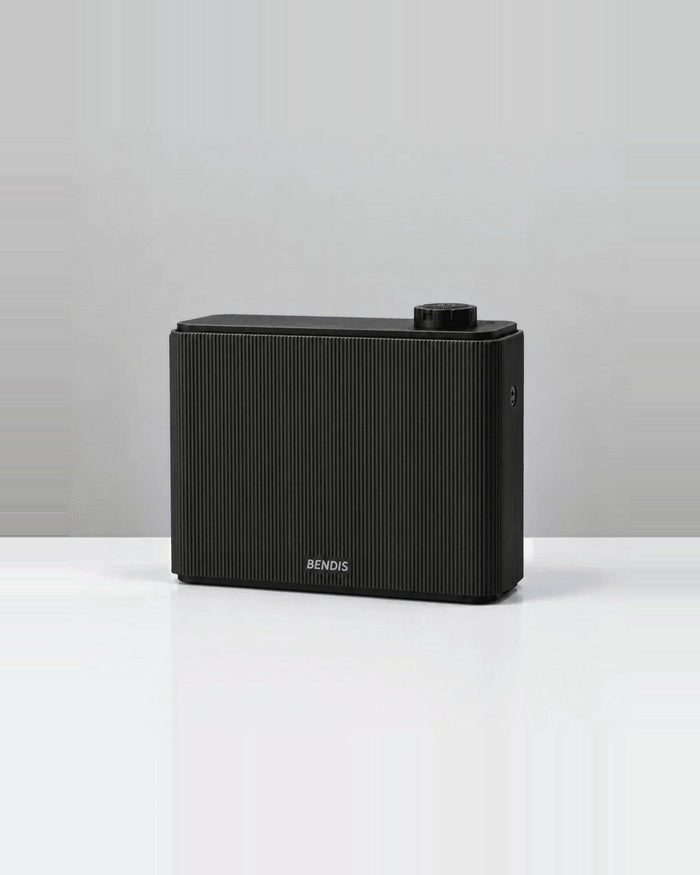
The key is intensity and consistency. A scent that is too strong distracts, which is precisely the opposite of what you want. Cold-air nebulising lets you control the concentration precisely and set schedules, keeping a constant, subtle level throughout the day.
Fragrances that work well in work environments: green tea, mint, lemon. On a monthly scenting plan, from 29.90€/month + VAT per unit, fragrance included and replenished monthly, with no minimum term and no upfront investment. The unit arrives configured for your square metres and is set up in five minutes.
The environment where people work is not a secondary detail. It is part of the result.
Scenting for offices · Services for businesses · 911 09 70 50