The smell of tobacco in a restaurant drives away customers who will never tell you why. Cleaning is not enough. Here is why, and what actually works.
A problem that generates no complaints
Even if your restaurant has been non-smoking for years, if it has a terrace, if it adjoins a bar where people smoke or if smoking was once allowed inside, it is very likely to have residual odour clinging to walls, ceilings, curtains and upholstery.
And here is the hard part: your customers can smell it and they do not tell you. They leave and write reviews along the lines of "the place needs a refresh" or "I didn't like the atmosphere", without identifying that what bothered them was a smell. That is why it never shows up in your complaints and does show up in your repeat rate.
You cannot smell it either, through olfactory adaptation. Ask someone walking in for the first time, and ask them as they come in, not ten minutes later.
Why it is so hard to remove
Tobacco smoke contains thousands of chemical compounds. The ones responsible for the lingering smell behave in a very specific way: nicotine and tars settle on porous surfaces and form a layer that releases volatile compounds little by little, over months or years.
This is what is known as third-hand smoke. The smell is not in the air: it is embedded in the materials, and the air is simply where it is released. That is why it comes back as soon as you stop ventilating.
What does not work
Forced ventilation. It extracts active smoke, but it does not touch what has settled on surfaces.
Air fresheners. They mask it for a while, and then the smell returns mixed with the fragrance. The mixture is perceived as worse than the original problem.
Candles. Only while they are lit, and within a two-metre radius.
Ozone. It works, but it is incompatible with people inside and has to be handled carefully. It is not a solution for daily use.
Painting over it. Seals the problem for a few weeks. After that the compounds come through again.
Specialist deep cleaning. This one does work in part, but it is expensive, it forces you to close and it has to be repeated, because the source is still there.
What does work: continuous neutralisation
The difference lies in the approach. Instead of trying to clean up everything that has accumulated in one go, you work continuously on what is being released.
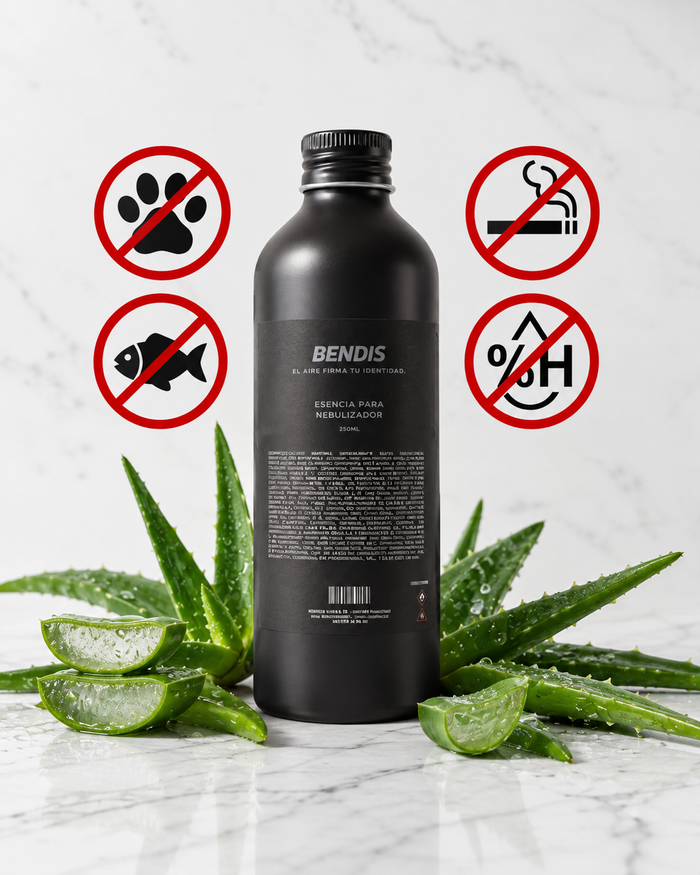
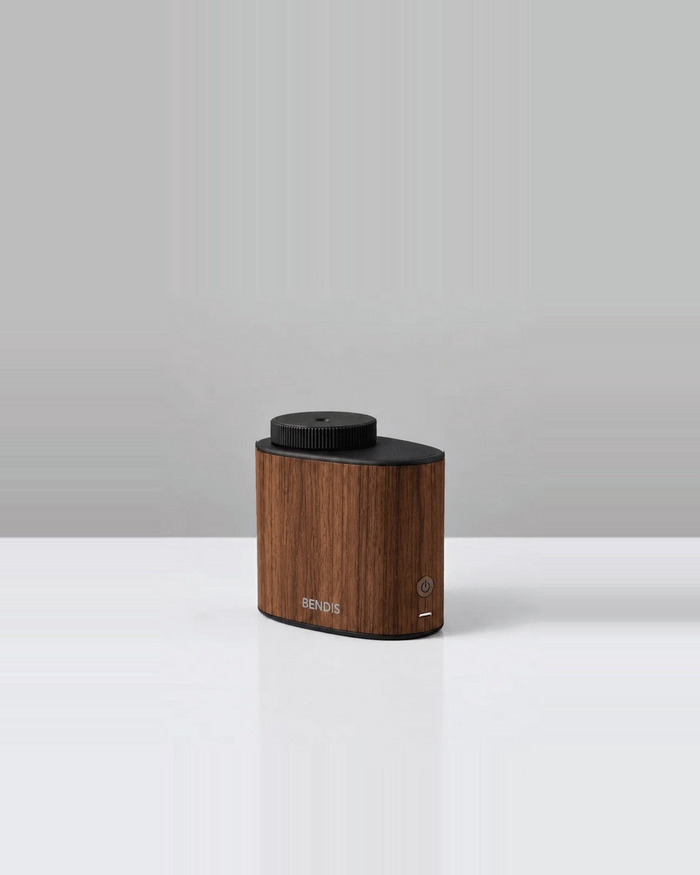
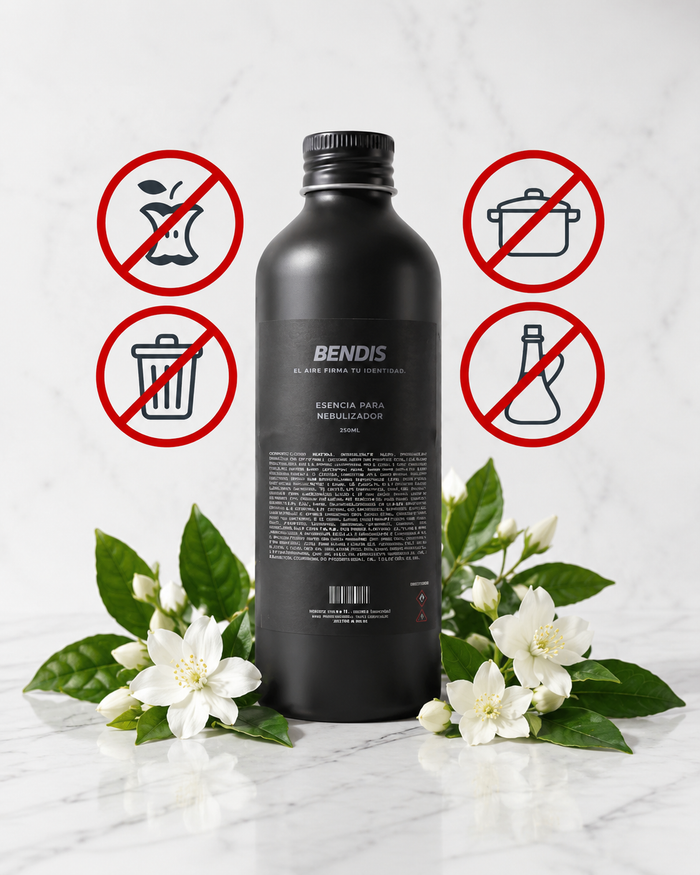
A nebulizer diffuses microparticles of a neutralising compound that reacts chemically with the tobacco molecules and turns them into odourless compounds. It does not cover them: it breaks them down. And because it runs continuously, it also neutralises what comes out of the surfaces day after day, and what comes in from the terrace in real time.
That last point is the important one if you still have smokers outside: this is not a one-off clean, it is a system that works for as long as the problem exists.
Where to put it
The doorway to the terrace. The point where the smell comes in. It is usually the most profitable of all.
The dining room, especially where there are textiles: curtains, upholstery, carpet.
The entrance. The transition zone with the street, and the first impression.
The toilets. They go separately, with their own unit. That is where the customer judges you alone.
Poorly ventilated storerooms. They build up smells without anyone noticing.
How we approach it
You tell us the square metres, the areas and where the source is. We propose a split: neutraliser in the critical areas and, once those are clean, fragrance in the rest.
The unit arrives configured for your square metres and is set up in five minutes. There is no building work, no installation and no site visit. It is programmed by time slot: more intensity outside service hours, when nobody is there, to work on what is embedded.
Resupply of the compound is monthly and included.
What to expect
Honestly: the atmosphere changes straight away, but the smell fixed in textiles, walls and furniture takes weeks of continuous operation to reverse. The older and more impregnated the premises, the longer it takes.
And the neutraliser does not replace the basics: if the curtains are saturated, they still have to be washed. What the system does is stop the room loading up again between one clean and the next.
What it costs
On rental, from 29.90€/month + VAT per unit, with the compound included and monthly resupply. No minimum term and no upfront investment. The total depends on how many areas need covering and the size of each one.
If you want to check it first, we will send you samples so you can try it in your own premises.
Call 911 09 70 50 or email info@bendis.es.
Scenting for restaurants · Odour neutralisation · Diffuser catalogue